
Finding the best air purifiers for allergies is the first step toward ending that constant, itchy sneezing. It is truly exhausting to feel like a prisoner in your own home because of pollen and dust. You deserve a clean space where you can finally breathe easy again. Our top picks use proven HEPA filters to transform your indoor air quality fast. Let’s find the right match to help you reclaim your comfort.
Contents
- Top 7 Air Purifiers for Allergies:
- 7: FULMINARE H13 True HEPA Air Purifier
- 6: Medify MA-14
- 5: LEVOIT Core 300
- 4: LEVOIT Vital 200S
- 3: Shark NeverChange HP152
- 2: Blueair Blue Pure 311i Max
- 1: Blueair Blue Pure 211i Max
- Things to Consider Before Buying a Air Purifiers for Allergies:
- Room Square Footage and Clean Air Delivery Rate (CADR)
- Filter Longevity and Long-term Maintenance Costs
- High-Efficiency Particulate Air (HEPA) Filtration
- Activated Carbon and Molecular Adsorption Systems
- Efficiency in Allergen Removal vs. Operational Noise
- Benefits of Multi-Stage Systems vs. Replacement Expenses
- Identifying Specific Indoor Respiratory Triggers
- Verifying Industry Certifications and Energy Ratings
- Strategic Placement for Unobstructed Airflow
- Optimal Fan Speed Settings for Continuous Relief
- Final Words
Top 7 Air Purifiers for Allergies:
7: FULMINARE H13 True HEPA Air Purifier

Our top pick for the best affordable air purifier for allergies in 2026 is the FULMINARE H13 True HEPA Air Purifier, which comes in at number seven.The majority of allergy sufferers are wary of shelling out over a hundred dollars for an air purifier that they have no guarantee will actually function. You may get the FULMINARE, which offers genuine H13 True HEPA filtration.
To start, the H13 True HEPA filter is 99.97% effective in capturing allergens at a size of just 0.3 microns, the same filtration level used in hospitals. Pet dander, pollen, and dust mites—all contained.Second, it’s ideal for bedrooms, when nighttime allergies tend to be worse, thanks to the built-in nightlight. Stop stumbling around in the dark trying to see if it’s turned on.
Thirdly, it won’t jolt you to sleep because it’s so silent. Keep it going all night long while you relax and take deep breaths in peace and quiet.Here are some drawbacks: the covering area is too narrow for larger rooms, the settings are too simplistic and lack smart capabilities, and the expense of replacing the filters quickly adds up.
6: Medify MA-14

The Medify MA-14, the top-tier affordable air purifier for severe allergy relief, comes in at number six.There must be a more cost-effective way to alleviate your allergies than spending. At its most affordable, air purifiers are more like playthings. The MA-14 stands out since it is an air purifier from a brand that focuses solely on medical-grade H13 HEPA.
To start, compared to regular HEPA, which traps particles as large as 0.3 microns, the H13 medical-grade HEPA filter traps 99.9 percent of particles as small as 0.1 microns. Captures allergens such as mold spores and germs that are too small for cheaper filters to catch.
The second one is 428 square feet covered in one hour. Not a little office at all; that’s a whole living room or master bedroom. Transmits solemn energy across the space.Thirdly, the white, little shape doesn’t take up much room on nightstands or shelves. Modifies the look of any space.The downsides include inferior coverage compared to mid-range alternatives, the absence of smart features and app management, and an unremarkable, simplistic look.
5: LEVOIT Core 300

Fifth place goes to the LEVOIT Core 300, the allergy air purifier that sold the best on Amazon in 2026.You require a tried-and-true alternative that carries no danger since you’re bewildered by all the choices. The Core 300’s meteoric rise to the top of Amazon’s air purifier sales chart is well-deserved.
First, 1,073 square feet of coverage has been verified by AHAM. Verified by third-party laboratories, this isn’t just empty promises. Effortlessly covers large open spaces, such as living rooms.Next up: a 56-watt motor that can go into sleep mode. Capable of moving substantial air through big areas, but quiets down to a whisper in a bedroom (24 dB). Its operation will remain undetectable to you.
The third feature is a 3-in-1 filter system that incorporates activated carbon, True HEPA, and a pre-filter. Concurrently eliminates smoke, smells, pet dander, and allergies.The downsides are that it only has manual controls and no smart features or WiFi connectivity.
4: LEVOIT Vital 200S

Managing allergies throughout the house has never been easier than with the LEVOIT Vital 200S, the top smart air purifier.You would like to achieve automation and monitoring of air quality without incurring exorbitant costs. The majority of intelligent air purifiers have an associated price. Full smart features are available at a mid-range price with the Vital 200S.
Firstly, app-controlled smart WiFi. Remotely monitor air quality, set up operating reminders, and schedule filter changes.Additionally, a PM2.5 air quality monitor is available for use in real-time. The unit clearly displays the levels of pollution using color coding. The fan speed is automatically adjusted in response to surges in pollution levels caused by cooking smoke, open windows, or the activity of pets.
The third benefit is that the HEPA filter lasts much longer thanks to the washable pre-filter. When compared to competitors, it saves about annually on filter replacement.
Lastly, it’s 75% larger than the Core 300 and covers 1,875 square feet. That’s no problem at all for whole flats or main floor plans.The smart functions can’t be used without stable WiFi, and the app setup isn’t without its learning curve. It’s also more expensive than the basic models.
3: Shark NeverChange HP152

the air purifier that ends the pain of constantly changing filters—the Shark NeverChange HP152. The air quality declines, your allergies worsen, and you completely forget to purchase them. This costly cycle is locked into your business by every rival. An escape route was devised by Shark.
A single filter replacement rather than eight to ten would be the result. Saves between during the purifier’s lifespan.Second, compared to regular HEPA, which only manages to capture 99.97% of particles, HEPA-exceeding filtration manages to capture 99.98%. In the midst of difficulty breathing, every fraction counts.
Thirdly, odor neutralizer technology does more than merely trap odors; it actively breaks them down at the molecular level. No longer will unpleasant odors, such as those from pets, cooking, or mustiness, linger.The unit is bigger than smaller ones, there is less long-term user data, and the upfront cost is more. It is also a newer product.
2: Blueair Blue Pure 311i Max
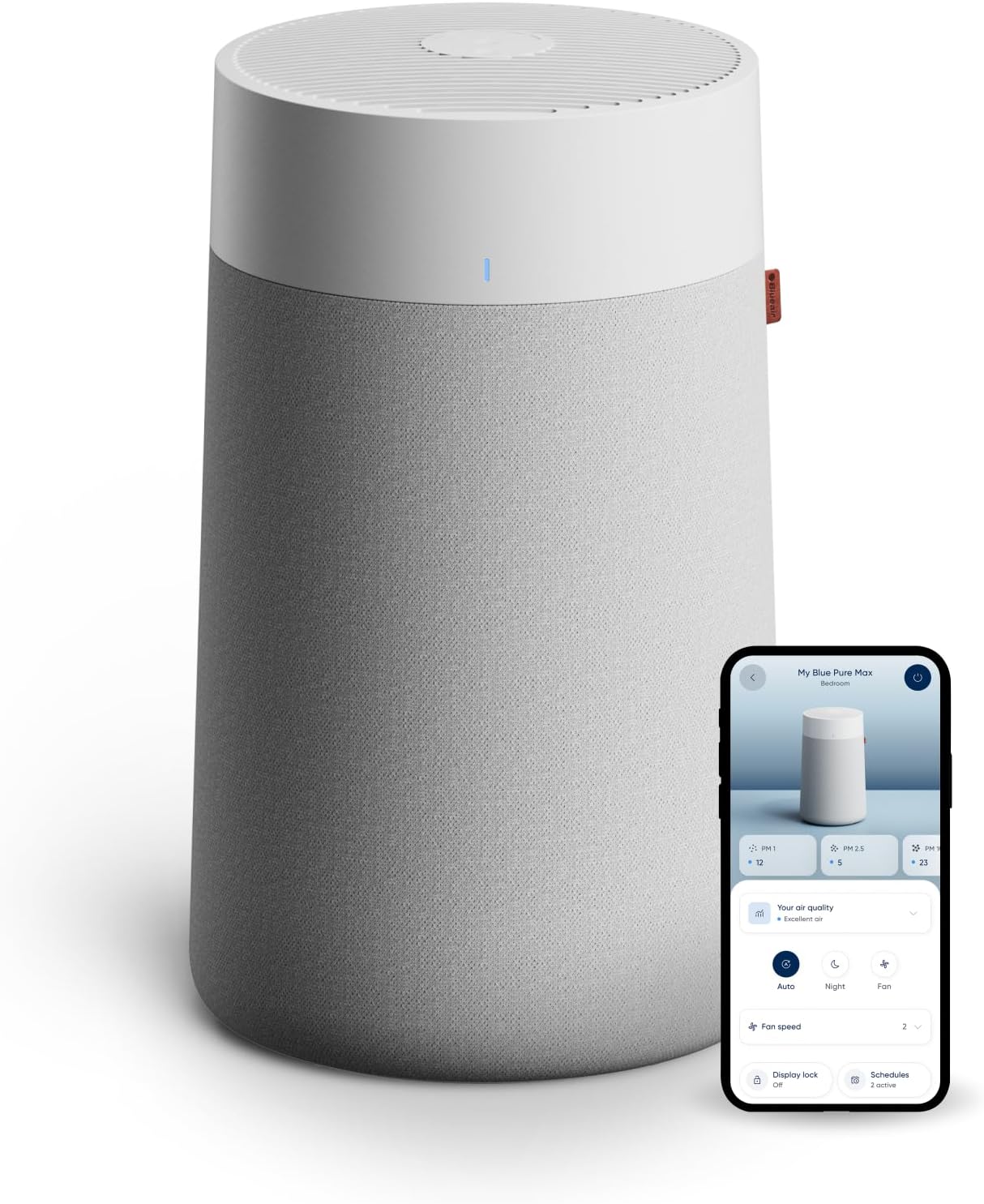
the top-tier Blueair Blue Pure 311i Max air purifier for people with severe allergies.Because of your severe allergies, you require products designed for professionals, not for the average consumer. A wide variety of brands produce blenders and vacuum cleaners. Blueair has become an industry leader in hospital and school air filtration. Just imagine that technology all neatly wrapped for your very own home.
To start, it has an hourly cleaning capacity of 1,858 square feet, making it ideal for open floor plans or rooms that are medium to large in size.To continue, at any pace, it operates at a whisper-quiet 23–49 dB. You won’t even notice it running in bedrooms all night long. A lot of air purifiers make a high-pitched whistling noise. This fades into oblivion.
On the third place, we have Scandinavian-style smart connectivity. Stylish, minimalist design that resembles furniture rather than medical equipment encases features like app control, air quality monitoring, Alexa, and Google Home connectivity.Negatives: The coverage is smaller than our top option, the premium pricing is roughly , and you still need to replace the filters every 6-12 months.
1: Blueair Blue Pure 211i Max

In 2026, the Blueair Blue Pure 211i Max, the most effective home air purifier on the market, was ranked first.It is the crown jewel. A whole-house solution that really works is necessary because your severe allergies are impacting your entire home. It takes hours for most purifiers to clean a room, despite their claims of extensive coverage. All eyes are on the 211i Max.
One hour is all it takes to clean 3,048 square feet. You can finish a house with almost 2,000 square feet in just under an hour. Compared to the next purifier on the list, this one is light years ahead.Second, even when set to its highest level of filtration, the flagship HEPASilent smart technology remains whisper-quiet, delivering medical-grade filtration with an efficiency of 99.97% down to 0.1 microns.
Thirdly, a mobile app that tracks air quality in real time. Behold the precise nature of your respiration. In the event that pollen from windows, cooking, or pets causes an increase in pollution, the purifier will automatically adapt to a higher setting.Fourthly, customizable color selections for a high-end Scandinavian style. The kind of showroom quality that will complement your existing decor.The only drawbacks are that it is the most costly option, it has a big footprint, and the expense of the filters adds up over time.
Things to Consider Before Buying a Air Purifiers for Allergies:
Over time, allergies can significantly impact your quality of life. Selecting the right air purifier is imperative for alleviating symptoms. This guide covers key factors to evaluate, ensuring you choose an effective device tailored to your specific needs.
Room Square Footage and Clean Air Delivery Rate (CADR)
Selecting an air purifier that suits your room size is imperative. Check its Clean Air Delivery Rate (CADR) to ensure it effectively circulates filtered air throughout the space, eliminating allergens efficiently.
Filter Longevity and Long-term Maintenance Costs
Evaluate the lifespan of the filters and the expenses associated with regular maintenance. Higher-quality filters typically last longer but may incur higher replacement costs.
Understanding filter longevity is key to budget management. While some air purifiers may seem affordable upfront, subsequent filter replacements can add up. Opting for models with HEPA filters often yields better allergen removal but keep in mind the cost and frequency of replacements to avoid unforeseen expenses in the long run.
High-Efficiency Particulate Air (HEPA) Filtration
HEPA filtration is recognized for its efficiency, capturing a wide range of allergens like pollen, pet dander, and dust mites. This technology ensures cleaner air by filtering out particles as small as 0.3 microns.
Activated Carbon and Molecular Adsorption Systems
Activated carbon systems excel in eliminating odors and harmful gases. They work effectively against volatile organic compounds, making them ideal for homes with strong smells or chemicals.
Activated carbon works through a process called adsorption, where pollutants adhere to the carbon surface, thereby trapping them. This method is particularly beneficial in spaces prone to cooking odors, chemical fumes, or pet smells. The effectiveness often depends on the carbon’s surface area and treatment, allowing for optimal pollutant removal.
Efficiency in Allergen Removal vs. Operational Noise
Choose air purifiers balancing efficiency and noise levels. High-efficiency models tend to operate louder, which might disrupt your peace. Opt for units with adjustable fan speeds to maintain a quiet environment while effectively removing allergens.
Benefits of Multi-Stage Systems vs. Replacement Expenses
Multi-stage systems may require higher initial investments but often result in long-term savings on replacements and maintenance. They combine various filtration technologies, enhancing overall performance while reducing the frequency at which you need to change filters.
Multi-stage systems offer a comprehensive approach to allergy management. By integrating HEPA, activated carbon, and additional filters, they target different pollutants. This versatility means you can rely less on separate units or frequent replacements, making them more cost-effective over time. Investing upfront can lead to fewer ongoing costs, easing the burden on your budget.
Identifying Specific Indoor Respiratory Triggers
Start by pinpointing allergens in your environment, such as pet dander, dust mites, or pollen. Knowing these triggers helps narrow down the air purifier features required for maximum relief. Effective filtration is key to improving your indoor air quality.
Verifying Industry Certifications and Energy Ratings
Examine certifications like the AHAM, CARB, and Energy Star. These indicate the air purifier’s effectiveness and energy efficiency, ensuring you’re making a well-informed purchase that meets industry standards.
Checking industry certifications and energy ratings entails looking for established endorsements that guarantee performance and safety. The AHAM certification can provide an assurance of clean air delivery rates, while Energy Star can ensure that your purchase is energy-efficient. This not only helps with health but also reduces your electricity bills.
Strategic Placement for Unobstructed Airflow
Positioning your air purifier wisely ensures maximum efficiency. Avoid corners or enclosed spaces; instead, place it at least a few feet from walls and furniture. This placement allows unimpeded airflow, enhancing the purifier’s ability to filter allergens effectively.
Optimal Fan Speed Settings for Continuous Relief
Selecting the appropriate fan speed can make a significant difference in air quality. Higher speeds are effective during allergy peaks, while lower settings may suffice during normal conditions.
Adjusting fan speeds based on your needs can help maintain a balance between noise levels and performance. During allergy seasons, running the purifier at a higher speed helps capture more airborne particles quickly. When allergens are less prevalent, you can switch to a quieter setting, allowing for ongoing relief without disruptive noise.
Final Words
Presently, selecting the right air purifier for allergies requires careful evaluation of imperative features such as HEPA filtration, room size compatibility, noise levels, and maintenance needs. Prioritize your specific allergy triggers and consider energy efficiency to ensure the unit meets both your health and budgetary requirements.
Leave a Reply