
Finding the best dehumidifier can turn a damp, smelly home into a refreshing sanctuary. You do not have to suffer through the suffocating grip of mold or sticky air anymore. By lowering moisture levels, you protect your family’s health and boost indoor air quality instantly. We tested the top units to help you breathe well again. Here is how to select the right one for your unique needs.
Contents
- Top 7 Dehumidifier:
- 7: ToLife 1000 Sq.Ft Dehumidifier
- 6: KNKA 2500 Sq.Ft 34-Pint Dehumidifier
- 5: Midea 22-Pint Energy Star Dehumidifier
- 4: Midea Cube 20-Pint Dehumidifier
- 3: Waykar 80-Pint Energy Star Dehumidifier
- 2: ALORAIR Sentinel HD55 113-Pint Dehumidifier
- 1: Waykar 150-Pint Energy Star Dehumidifier with Pump
- Things to Consider Before Buying a Dehumidifier:
- Measuring Square Footage and Moisture Intensity
- Understanding Local Climate Impact
- Compressor vs. Desiccant Systems
- Portable Units vs. Whole-Home Solutions
- Health Benefits and Structural Protection
- Energy Consumption and Noise Considerations
- Determining Necessary Pint Capacity
- Assessing Drainage Requirements and Portability
- Automatic Humidistats and Timer Controls
- Energy Star Efficiency Ratings
- Strategic Placement for Maximum Airflow
- Routine Cleaning and Filter Longevity
- Conclusion
Top 7 Dehumidifier:
7: ToLife 1000 Sq.Ft Dehumidifier
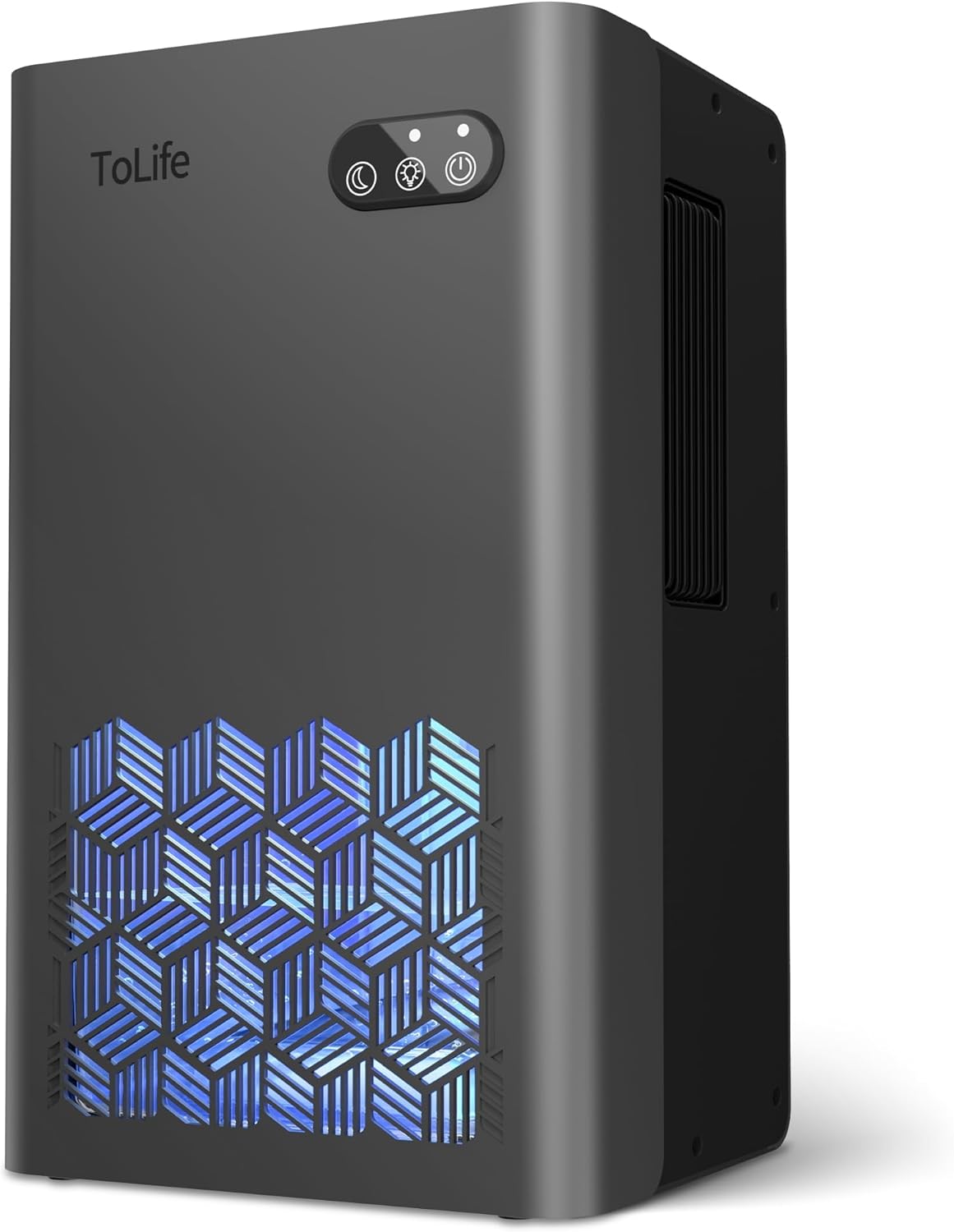
For a single moist room, the ToLife 1000 is the greatest ultra-budget option.A damp, musty closet. A perpetually damp restroom. Just one machine for that area will do; a full home machine is unnecessary.The first is the use of semiconductor condensation rather than a compressor, which eliminates the need for a motor, vibration, and the rattle of a thin wall.Finally, a low-volume sleep mode (less than 30 dB). Quite enough to run silently next to a bed all night long.
As a last feature, it has an automatic shut-off system that prevents the 95-ounce tank from overflowing.Downside: less moisture is drawn in by semiconductor units compared to compressors. Reduced productivity in a frigid basement. Just empty it by hand; there’s no drain hose.Ideal for: storage spaces, compact washrooms, and solitary bedrooms. Full basements or spaces without heating are not suitable.
6: KNKA 2500 Sq.Ft 34-Pint Dehumidifier

For a small to medium basement, the KNKA 34-pint is the greatest affordable compressor.Humidity is reduced throughout an entire floor by means of a compressor. You won’t find a cheaper one than this one.To start, it’s not a trickle but a serious extraction: 34 pints per day over 2,500 square feet.Next, you’ll see three modes: continuous running, a clothes-dry cycle, and dehumidify from 30 to 80 percent.Lastly, the box contains a drain pipe that, when left unattended, will lead to a floor drain.
Downside: you’ll need a drain underneath it or to empty the tank because it doesn’t come with an integrated pump. When the temperature is 95 degrees and the humidity is 90%, the volume is 34 pints.Ideal for: garages, finished basements, and laundry rooms. Avoid in enclosed crawl areas or expansive basements.
5: Midea 22-Pint Energy Star Dehumidifier

For the most bang for your buck, go with the 22-pint Midea.An hour isn’t long enough to run a dehumidifier in a basement. Several months pass. It is a poor transaction to buy cheap yet power dear.First of all, it is Energy Star certified and uses around 31% less power than a standard device. That appears on all invoices.Coming up next: 47 dB, which means a finished basement may be used even while it’s working.
At last: a filter that can be washed and reused; just slide it back in after a thorough cleaning. Do not rearrange.Downside: 22 pints per day isn’t exactly a full basement worth of space—that’s a 1,500 square foot machine. Integrated pump not present. Sometimes, Wi-Fi pairing is finicky.Ideal for medium-sized bedrooms, basements, and continuous use. Neither large basements nor flood recovery should be attempted.
4: Midea Cube 20-Pint Dehumidifier

In the absence of a floor drain in a basement, the Midea Cube is the optimal choice.It happens with every dehumidifier. Bringing a bucket upstairs twice a day is a necessity due to the lack of a drain nearby.A 3.2-gallon bucket is the first component; this is three times the capacity of a standard tank, allowing for three times the runtime between refills.After the wet season ends, the stacked cube design collapses, allowing just a portion of the area to be stored.
Last but not least: it’s Energy Star certified, and you can adjust the humidity level from upstairs using the app or Alexa.Downside: The daily limit is 20 pints. Carrying a full bucket is no easy task. The time needed to set up the app is minimal.Ideal for: short-term usage, smart-home installations, and unfinished basements without a drain. Avoid in heavily flooded or exceptionally spacious basements.
3: Waykar 80-Pint Energy Star Dehumidifier
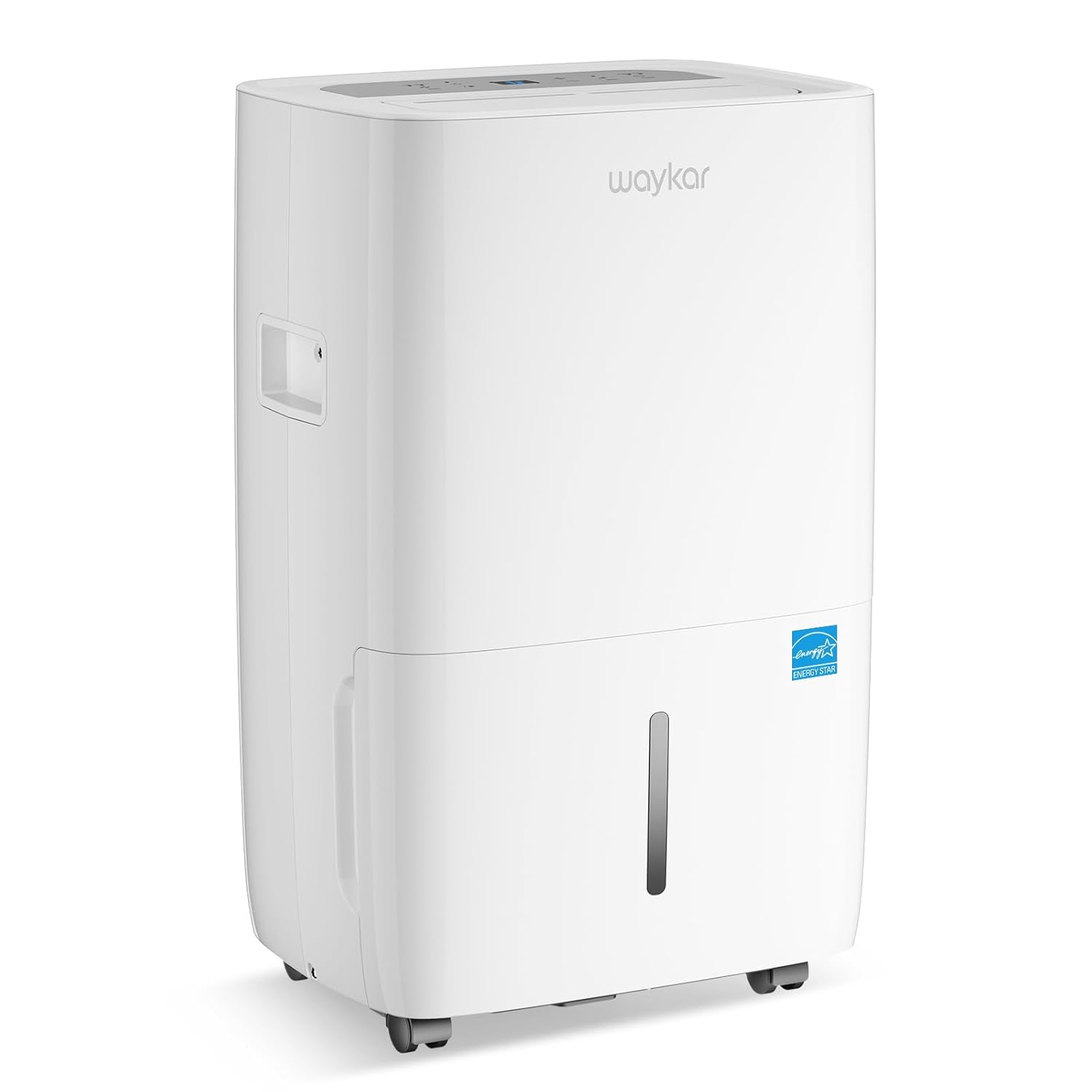
The 80-pint Waykar is ideal for a spacious, unfinished basement.There are dead corners in large basements. No matter the pint rating, a unit on one end will cause the opposite wall to become moist.The first is that there is enough water to fill an unfinished basement—80 pints a day over 5,000 square feet.The next step, instead of hammering one wall, the dry air is swept side to side by the 90-degree auto-swing airflow. The corners are reached by that.
At long last, a 1.14-gallon tank with an endless drain hose—you can use it as a bucket when you want to or leave it alone when you don’t.Downside: gravity drainage requires a drain beneath the unit, and there is no built-in pump. Complicated and cumbersome to transport to the upper floor. Hot, saturated air is assumed in that rating.Ideal for: spacious, unfinished basements, garages, and open bottom floors. Avoid using in tight quarters or on a crawl space.
2: ALORAIR Sentinel HD55 113-Pint Dehumidifier
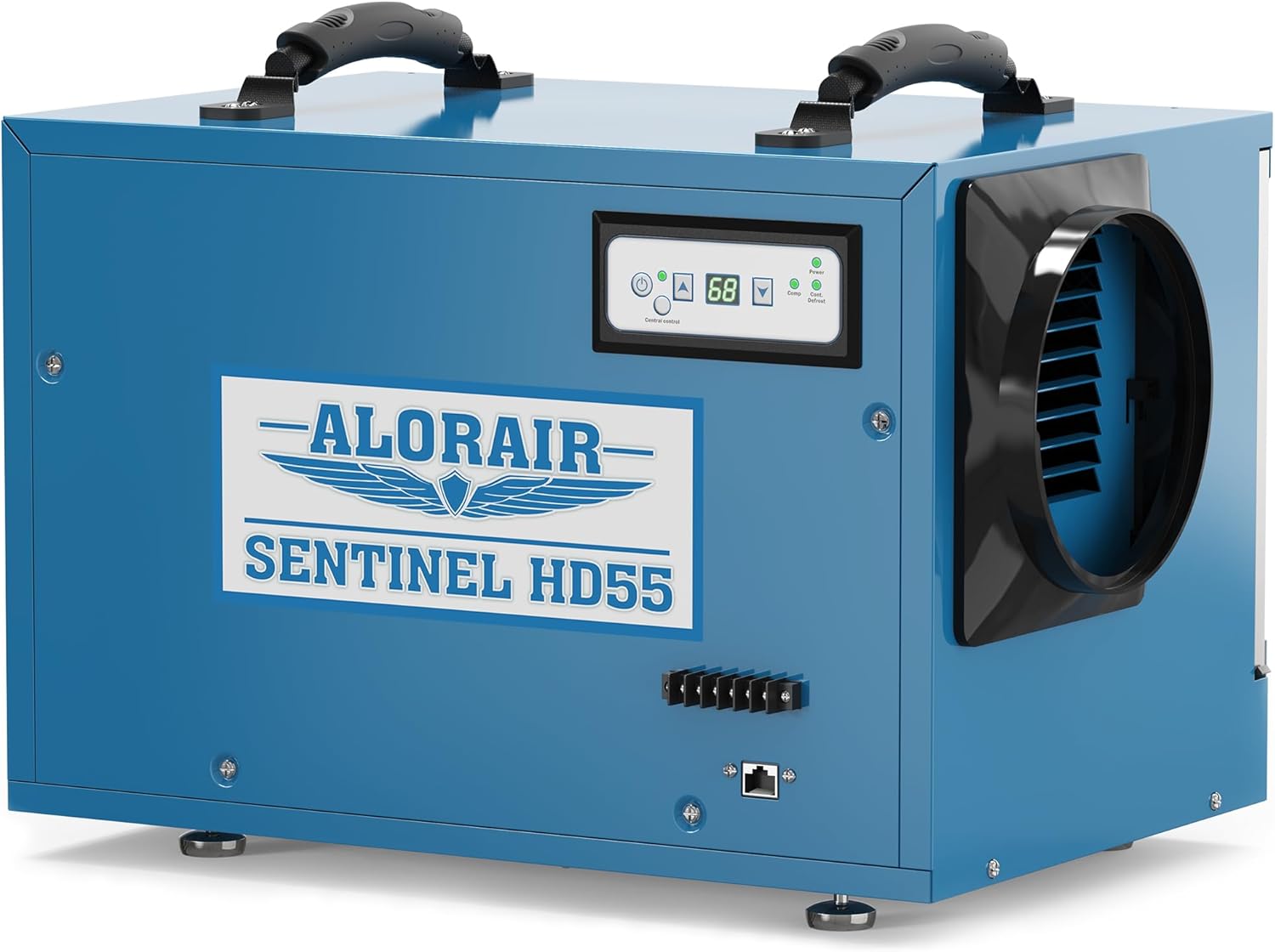
When it comes to sealed crawl spaces, the ALORAIR Sentinel HD55 is the way to go.You will never want to work in a crawl space. No turning back once a unit has gone down there.For starters, it’s not suitable for a carpeted den but rather a dirt crawl space due to its metal exterior and cETL designation.The following is a specification for enclosed spaces: 1,200 square feet, 113 pints at saturation, and 53 pints at AHAM.Last but not least: auto defrost memory—in the event of a power outage, it resumes operations from the last setting and continues to function as temperatures decrease.
Downside: you’ll need to buy a separate kit or risers to hang it from the joists. Must be supported by others. Excessive for a completed space.Ideal for: enclosed crawl spaces, wet basements, long-term installations. Those looking for a portable unit or those who rent are not eligible.
1: Waykar 150-Pint Energy Star Dehumidifier with Pump

A 150-pint Waykar with a pump—designed for a basement that doesn’t have a drain.In order for gravity drainage to function, a drain must be located below the machine. Carrying buckets is the norm in basements that are below ground level because there is usually none.To start, there’s an integrated pump that can push water as high as 9.84 feet, which can then be directed into a utility sink or out a window well. No need for a floor drain.
Secondly, a 7,000 square foot area that can be adjusted from 30 to 80 percent and can hold 150 pints every day.Thirdly, even in a chilly cellar, the coils stay clear thanks to the auto defrost and self-drying cycles.As for the fourth point, it is Energy Star certified and can restart memory during an outage.Downside: unplugging the pump requires resetting it. The largest unit available here, requiring actual square footage. Not enough for a modest basement.Optimal for: dwellings lacking a floor drain, basements below ground level, and damp cellars.You already have a little room? It won’t work for you.
Things to Consider Before Buying a Dehumidifier:
Just deciding to buy a dehumidifier involves careful thought. Assessing factors like room size, humidity levels, and energy efficiency will help you choose the right model for your needs. Understanding these elements ensures that your investment effectively combats excess moisture, promoting a healthier indoor environment.
Measuring Square Footage and Moisture Intensity
Accurate measurement of your space is imperative. Knowing square footage helps determine the required dehumidifier capacity, while assessing moisture intensity informs you of how powerful the unit needs to be. For instance, a basement may require a larger unit compared to a small bathroom.
Understanding Local Climate Impact
Local climate significantly influences humidity levels in your home. Areas with high humidity will require a more powerful dehumidifier, while regions with dry air may need a smaller unit. Consider both the average humidity in your environment and seasonal fluctuations.
Residents in coastal areas often experience higher humidity levels due to proximity to water sources. In contrast, those in arid regions face lower moisture but may see increased humidity during certain seasons. For example, places like Florida tend to have persistent humidity, necessitating robust dehumidifiers with high capacity. Adjusting your choice based on these environmental conditions will enhance the effectiveness of your unit.
Compressor vs. Desiccant Systems
Both compressor and desiccant systems have specific advantages. Compressor units are energy-efficient in warm climates, while desiccant devices excel in colder conditions. Each type’s effectiveness varies based on humidity levels, requiring tailored selection for optimal performance.
Portable Units vs. Whole-Home Solutions
Portable units offer flexibility, easily moving from room to room, which is beneficial for localized issues. Whole-home solutions, however, integrate with existing HVAC systems, providing comprehensive humidity management throughout a property.
Factors affecting your choice between portable and whole-home solutions include space and usage frequency. Portable units suit smaller spaces or temporary needs, saving costs. Alternatively, whole-home options are better for persistent humidity problems, ensuring a consistent environment throughout larger properties and eliminating the need for multiple appliances.
Health Benefits and Structural Protection
Owning a dehumidifier contributes significantly to your health by reducing allergens such as mold and dust mites. Structures benefit too, as lower humidity levels can prevent damage to walls, ceilings, and wood furnishings, thereby prolonging the lifespan of your property.
Energy Consumption and Noise Considerations
Energy consumption varies based on the model and use. Noise levels during operation can range from barely noticeable to disruptive, particularly in compact units. Evaluating energy efficiency ratings can help you find a suitable balance between performance and sound levels.
Noisy units can detract from comfort, especially in living spaces where quiet is vital. Energy Star-rated models often provide efficient performance, keeping energy bills lower while maintaining effective humidity control. Brands often market their devices as quiet options, but real-world user reviews should guide your decision to ensure you select a model that balances efficiency without excessive noise disruption.
Determining Necessary Pint Capacity
Calculating the pint capacity required involves assessing the size of the space and its humidity level. Smaller areas may need units that remove about 30 pints per day, while larger basements could require capabilities of 70 pints or more to handle damp conditions effectively.
Assessing Drainage Requirements and Portability
Consider your preferred method for draining collected water, as many units offer options ranging from a built-in tank to a continuous drainage system. Portability is also imperative; if you plan to move the dehumidifier, opting for units with wheels and lightweight designs will make transportation easier.
Evaluating drainage options can influence your overall experience with the dehumidifier. Continuous drainage models often include hoses allowing water to flow directly into a sink, offering convenience without frequent tank emptying. Portable units with handles or casters facilitate movement between rooms, enhancing usability in various areas of your home. Choosing the right combination can significantly impact performance and maintenance efforts.
Automatic Humidistats and Timer Controls
Automatic humidistats detect humidity levels and adjust operation accordingly, providing an efficient way to manage moisture without constant manual input. Timer controls enable you to set specific operating times, optimizing both energy consumption and convenience.
Energy Star Efficiency Ratings
Energy Star ratings indicate dehumidifiers that meet strict energy efficiency guidelines, potentially reducing your energy bills. Choosing a model with this certification signifies a commitment to both performance and environmental responsibility.
Models with Energy Star ratings often use at least 15% less energy than non-certified counterparts. This makes a significant impact on monthly utility costs, especially for continuous-use scenarios. An Energy Star dehumidifier not only helps to maintain your indoor air quality but also reflects an environmentally conscious choice, aligning with long-term sustainability goals.
Strategic Placement for Maximum Airflow
Positioning the dehumidifier correctly facilitates maximum airflow throughout the space. Ideally, it should be placed in a central location, away from walls and furniture, to allow air to circulate freely.
Routine Cleaning and Filter Longevity
A cleaning routine is vital for maintaining recommended humidity levels. Regularly cleaning filters can improve air quality and efficiency.
Dust and allergens can accumulate in filters over time, resulting in reduced airflow and performance. Cleaning or replacing filters every few months ensures that the unit maintains optimal efficiency. For most units, take note of the manufacturer’s guidelines regarding cleaning frequency, as this can vary. Maintaining a clean filter reduces energy costs and extends the lifespan of the dehumidifier, making it a cost-effective appliance in the long run.
Conclusion
Evaluate your space, budget, and specific humidity needs before making a decision on a dehumidifier. Consider capacity, energy efficiency, and features that align with your lifestyle. Selecting the right model can improve air quality and protect your home from moisture-related issues, ensuring a more comfortable living environment.
Leave a Reply