
Best Ductless Air Conditioners help you beat high bills and uneven home cooling fast. Our expert-tested mini-split and energy-efficient picks deliver quiet, powerful comfort while cutting your energy costs. You’ll feel instant relief and love the peaceful, cool rooms-it’s a game-changing comfort boost. We promise clear comparisons and smart tips to match any room and budget. Read on for top models and simple buying advice.
Contents
- Top 7 Ductless Air Conditioners:
- 7: Rellytech 9000 BTU Mini Split AC/Heating System
- 6: COSTWAY 12000 BTU Mini Split Air Conditioner & Heater
- 5: TOSOT 9,000 BTU Wi-Fi Mini-Split Air Conditioner
- 4: DELLA Vario Series 12000 BTU Mini Split Air Conditioner
- 3: Cooper & Hunter MIA 12,000 BTU 115V Mini Split
- 2: Senville LETO 24000 BTU Mini Split Heat Pump
- 1: Senville AURA 9000 BTU Mini Split Heat Pump
- Things to Consider Before Buying a Ductless Air Conditioner:
- Single-Zone Wall-Mounted Units
- Multi-Zone Outdoor Condenser Configurations
- Indoor Unit Placement and Airflow Clearance
- Condensate Drainage and Line Set Routing
- Energy Efficiency and Precise Zoned Cooling
- Higher Initial Investment and Interior Aesthetics
- Estimating Equipment and Professional Labor Costs
- Utilizing Energy Rebates and Federal Tax Incentives
- Selecting Advanced Features and Smart Connectivity
- Routine Filter Maintenance and Coil Cleaning
- Scheduling Professional Seasonal Inspections
- Summing Up
Top 7 Ductless Air Conditioners:
7: Rellytech 9000 BTU Mini Split AC/Heating System
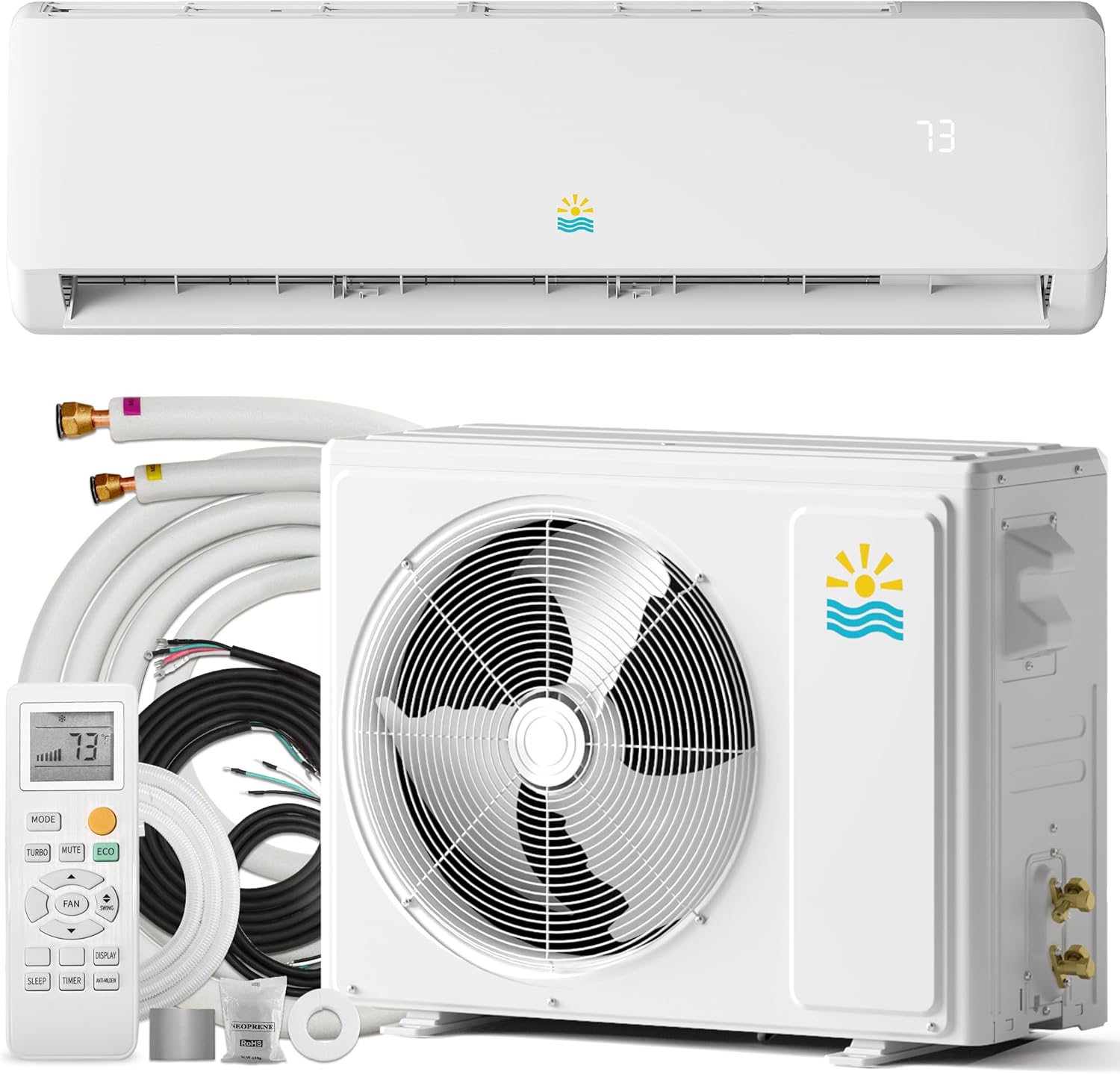
The most cost-effective ductless option for a single small room is the Rellytech 9000 BTU.The summertime rattle of a window unit obscures your vision. A true split system is installed in that room by Rellytech.You can cool or heat up to 550 square feet (a bedroom, office, or one-car garage) with just 9,000 BTU.There is no need to run a large 230-volt line because it operates on a regular 115-volt circuit with a 19 SEER2 inverter.
For a peaceful night’s sleep, there’s a sleep mode, a 24-hour timer, and an LED-off function.Disadvantages: cannot be controlled by voice or app; only by remote. A whopping 42 dB, it’s definitely not the calmest spot here. Expert installation is necessary.Ideal for: rooms with just one bed, home offices, and limited spending plans. Do not use in large rooms or with smart home systems.
6: COSTWAY 12000 BTU Mini Split Air Conditioner & Heater

The COSTWAY 12000 BTU is the most cost-effective option because it cleans itself.Most people who own mini splits never even open them, so they’re sitting ducks for dust and dampness. That is taken care of by the COSTWAY itself.To start, there’s a self-cleaning feature that dries up the inside by heating it to 134.6 degrees, and there’s also a removable filter.Following that, a 20 SEER inverter and 12,000 BTU of cooling and 12,300 BTU of heating on a 115-volt circuit.
Lastly, when winter frost builds up, the outdoor unit’s auto-defrost feature keeps the heat running.Drawbacks: Just a remote control, no Wi-Fi or app mentioned. We do not publish any low-temperature heating ratings.Recommended for: owners who prefer a minimal level of maintenance and rooms that are mid-size. Not recommended for use in cold climates or with app-controlled fans.
5: TOSOT 9,000 BTU Wi-Fi Mini-Split Air Conditioner

For peaceful environments like nurseries and bedrooms, go no farther than the TOSOT 9,000 BTU.You can’t call it an update if your cooling system hums nonstop while you sleep. You can sleep soundly on the TOSOT.To start, it runs at a very low decibel level (22 to 36 dB) when turned off.The next step is to create daily or weekly schedules in the GREE+ app to have the room ready for you when you arrive.
Lastly, a 20.5 SEER2 inverter can cool down to 13 degrees below zero while operating in 118 degree heat.One room is better than an open floor plan with 9,000 BTUs. Expert installation is necessary. Longer runs are limited by the 16-foot line.Perfect for: bedrooms, nurseries, and those who sleep lightly. Avoid in expansive open floor plans and living spaces.
4: DELLA Vario Series 12000 BTU Mini Split Air Conditioner

For the most cost-effective solution, go with the DELLA Vario Series 12000 BTU.An hour or two of daily mini-splitting is standard. You continue to pay for efficiency.The most efficient 12,000 BTU option featured has 23 SEER2 and 9.5 HSPF.The heat pump then self-defrosts and pre-heats the compressor so it can function down to four degrees below zero.
Last but not least, the I Feel mode takes readings from the remote control, not the wall unit, but from where you are sitting.Downside: you’ll need an electrician because it requires a 230-volt circuit. During installation, line-set vacuuming must be performed.Rooms that run all year round and users that utilize it all day long are the best. No 230-volt power available to your residence.
3: Cooper & Hunter MIA 12,000 BTU 115V Mini Split
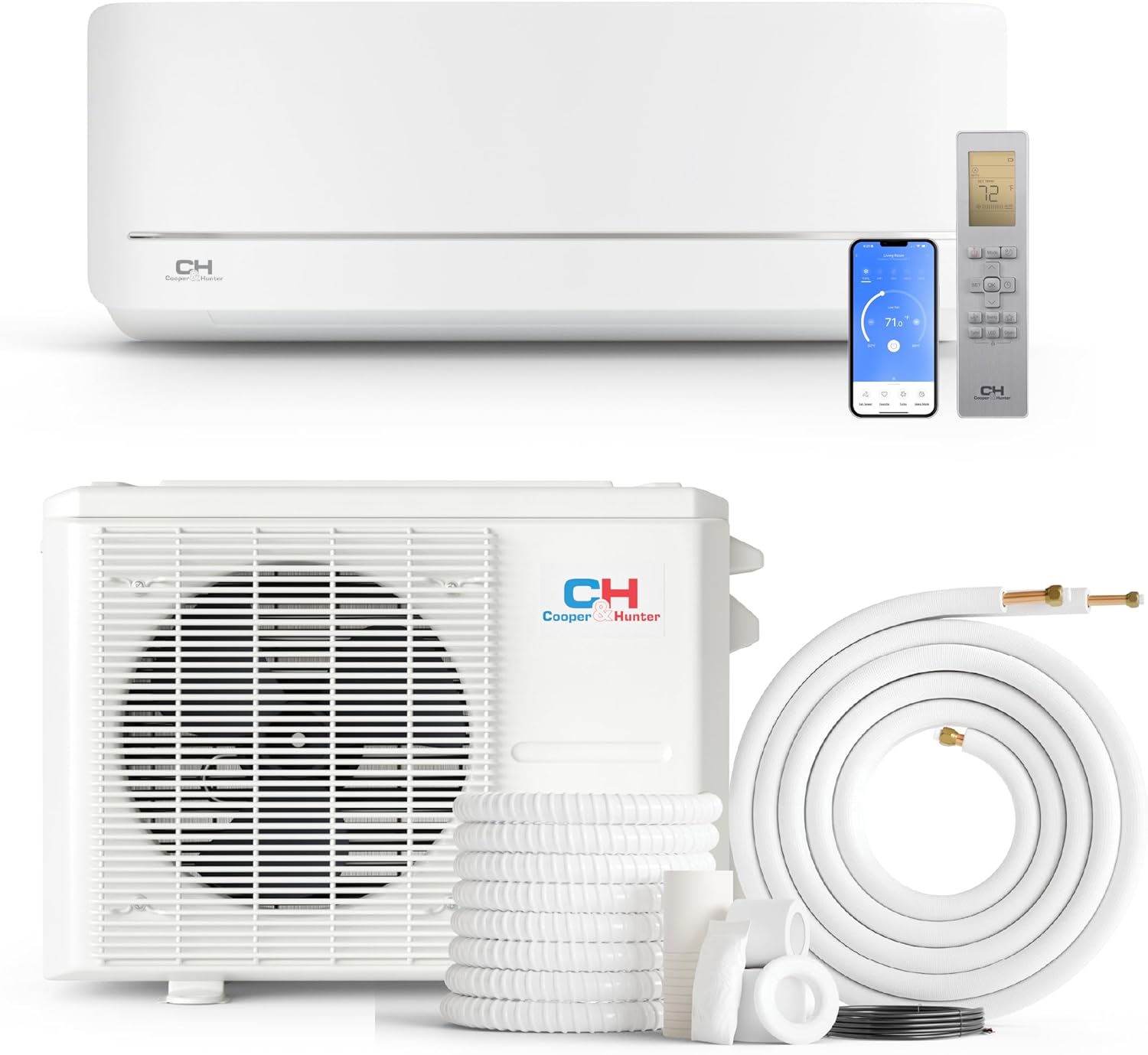
When it comes to conventional 115-volt circuits, the greatest all-arounder is the Cooper & Hunter MIA 12,000 BTU.The best 12,000 BTU systems require a 230-volt power source. The person who went missing doesn’t.First, great efficiency without rewiring is possible with 21.2 SEER2 on 115 volts.Following that, the indoor unit operates at 26 dB, and the smart kit that comes with it allows for scheduling via phone and remote control.
Plus, a 16-foot pair of insulated, pre-flared lines, communication wire, and a drain extension are all part of the kit.Drawbacks: the lowest temperature it can withstand is 5 degrees. Expert installation is necessary because it is not a do-it-yourself system.Rooms without a 230-volt line, expansions, and living rooms are the best candidates. Avoid in areas with harsh winters or if you plan to install it yourself.
2: Senville LETO 24000 BTU Mini Split Heat Pump

A 24000 BTU Senville LETO is ideal heating expansive outdoor areas.Thus far, each system has only dealt with a single room. Never will they be able to catch up in a two-car garage or on an open main floor.The first is 24,000 BTU, which is twice as much as the 12,000 BTU selections, or two tons.Following that, we have an 18.7 SEER inverter that features a heat pump, a dehumidifier, and turbo modes; it can operate down to 5 degrees.
Last but not least: a condenser that can withstand runs of up to 25 feet, controllable through Alexa and an accompanying app with routines.Be aware that it requires a 220 volt circuit. The peaceful bedroom options are muted compared to this one, which is 34 dB louder.Expert installation is necessary.Ideal for: living rooms with an open layout, garages, and workshops. Exceptions: dwellings without a 220 volt electrical system or a single bedroom.
1: Senville AURA 9000 BTU Mini Split Heat Pump

The Senville AURA 9000 BTU is the best ductless air conditioner because it can withstand cold weather when other heat pumps can’t.When you need heat the greatest, the toughest other choices here halt between 5 and 13 below.Firstly, it is unique among these systems in that it may reach temperatures as low as 22 degrees below zero, both up and down.The second most efficient option is 28 SEER, which is certified by Energy Star.
Thirdly, it is suitable for use in a bedroom or office due to its 23.5 dB rating.Turbo, sleep, and automatic restart are the fourth features, along with Alexa and app management for personalized routines.Cons: 9,000 BTU only heats a single room, not a whole floor. A 208 to 230 volt circuit is required. This system should only be installed by trained professionals.Cabins, homes in cold climates, and those replacing baseboard heat are the best candidates. Neither big rooms nor do-it-yourselfers should attempt this.
Things to Consider Before Buying a Ductless Air Conditioner:
Investing in a ductless air conditioner can significantly enhance your home’s comfort and energy efficiency. Before making a decision, consider factors such as room size, installation requirements, and long-term maintenance needs. Understanding these aspects will help you choose the right system that best suits your specific environment.
Single-Zone Wall-Mounted Units
This option serves a single room and is one of the most popular ductless air conditioners. Typically mounted high on a wall, these units are effective for specific areas like bedrooms or home offices. The installation process is straightforward, requiring minimal alterations to your space. Homeowners appreciate their efficiency and ease of use. Many models also come with smart technology features, allowing remote operation through mobile devices for enhanced convenience.
Multi-Zone Outdoor Condenser Configurations
A multi-zone system connects multiple indoor units to a single outdoor condenser. This setup is particularly suited for larger homes or those with open-concept layouts where temperature control in several rooms is necessary. Flexibility in indoor unit placement is a major advantage, as it accommodates diverse cooling needs throughout the home. These configurations often lead to energy savings by allowing you to cool only the areas in use, offering both comfort and efficiency.
Indoor Unit Placement and Airflow Clearance
Optimal placement of the indoor unit can greatly influence comfort and efficiency. Avoid areas obstructed by furniture or other objects, maintaining at least a few feet of clearance around the unit. Ceiling height and room size also play a critical role in air circulation; installing the unit high on a wall generally produces better airflow. Aim for locations that serve multiple rooms, ensuring that air can circulate freely and reduce hot spots or cold drafts.
Condensate Drainage and Line Set Routing
Effective condensate drainage is necessary to prevent moisture buildup and potential damage. Ensure that the drainage line slopes downward, allowing for proper water flow away from the unit. Plan the routing of the line set carefully, aiming for a short and direct path between the indoor and outdoor units. Avoid sharp bends, as these can impede refrigerant flow and reduce efficiency. Choosing the right materials for these lines will impact both performance and longevity.
Energy Efficiency and Precise Zoned Cooling
Ductless air conditioners excel in energy efficiency, often significantly reducing energy consumption compared to traditional systems. By providing zoned cooling, these units allow you to tailor the temperature in individual rooms or spaces. Areas that are rarely used do not need to consume energy, leading to precise control over your home’s climate. Such targeted cooling not only enhances comfort but can also lead to noticeable reductions in energy costs over time.
Higher Initial Investment and Interior Aesthetics
A notable downside of ductless systems is the higher initial investment required for purchasing and installing them. Depending on the model and installation complexity, costs can be a barrier for some homeowners. Interior aesthetics may also be a concern, as outdoor units can affect the appearance of your property. While indoor air handlers are generally discreet, their placement still requires careful consideration to blend seamlessly with your existing décor.
Estimating Equipment and Professional Labor Costs
Equipping yourself with accurate estimates for the equipment and labor needed is essential for effective budgeting. Research various ductless air conditioner models, as prices can vary widely based on features and efficiency ratings. When hiring professionals, remember that installation costs can depend on factors like your home’s layout and local labor rates. Gathering multiple quotes will give you a clearer picture and help you make an informed financial decision.
Utilizing Energy Rebates and Federal Tax Incentives
Identifying available energy rebates and federal tax incentives can significantly reduce your initial investment. Many utility companies offer rebates for energy-efficient systems, allowing you to recoup part of the cost. Additionally, federal tax credits may apply when you install qualifying energy-saving cooling systems. Taking advantage of these financial benefits can make your ductless air conditioner more affordable, allowing you to allocate funds to other priorities in your budget.
Selecting Advanced Features and Smart Connectivity
Advanced features can enhance the functionality of your ductless air conditioner. Items such as programmable timers, Wi-Fi connectivity, and energy-efficient settings provide convenience and control. When considering smart features, think about how they fit into your daily routine. Devices capable of integration with home automation systems offer added benefits, such as remote operation and notifications. These advancements can significantly improve user experience and energy savings.
Routine Filter Maintenance and Coil Cleaning
Cleaning or replacing filters every one to three months is pivotal to maintaining your ductless air conditioner. Clogged filters impede airflow, leading to inefficient cooling and increased energy consumption. Coil cleaning should occur at least once a year, as dirt accumulation can cause the compressor to overheat and fail. Regular filter and coil maintenance not only improves air quality, it also contributes to the unit’s overall longevity, often enabling it to function effectively for over a decade.
Scheduling Professional Seasonal Inspections
Scheduling seasonal inspections with a qualified technician is essential for optimal performance. These inspections allow for more in-depth maintenance tasks, such as checking refrigerant levels and inspecting electrical components. Technicians can identify potential issues that may go unnoticed during routine filters and coil cleaning. Engaging professionals at least twice a year keeps the system running smoothly and can significantly enhance its efficiency and lifespan, safeguarding your investment for the long term.
Summing Up
Before investing in a ductless air conditioner, assess your specific cooling needs and the layout of your space. Consider energy efficiency ratings and potential installation costs, which can vary significantly based on the setup and local labor rates. Evaluate the availability of maintenance services in your area to ensure long-term reliability. Finally, weigh the benefits against your budget, as the initial expenditure can influence long-term savings and satisfaction. Making informed choices now can lead to greater comfort and efficiency in the future.
Leave a Reply