
Best Electric Pressure Washers can blast away stubborn grime and save you hours of hard scrubbing. Our expert team tested top electric power washer models and wrote clear pressure washer reviews to help you choose a reliable, budget-friendly unit. Expect powerful, effortless cleaning that restores your home exterior and feels truly game-changing and satisfying. Ready for honest picks and tips to get the job done fast?
Contents
- Top 7 Electric Pressure Washers:
- 7: Westinghouse ePX3050
- 6: CRAFTSMAN CMEPW1700
- 5: Sun Joe SPX3000
- 4: Westinghouse ePX3500
- 3: Westinghouse WPX3000e
- 2: EGO Power+ HPW2100
- 1: Giraffe Tools Wall Mounted Pressure Washer Essential 100FT
- Things to Consider Before Buying a Electric Pressure Washer:
- Light-Duty Handheld Models
- Medium-Duty Residential Units
- Heavy-Duty Semi-Professional Designs
- Pressure output (PSI) and water flow (GPM)
- Universal vs. induction motors
- Hose length and nozzle versatility
- Advantages of electric over gas models
- Common limitations and power constraints
- Cost-effectiveness and environmental impact
- Assessing Your Primary Cleaning Surfaces
- Setting a Realistic Budget Range
- Comparing Brand Reliability and Reviews
- Safe handling and electrical precautions
- Proper nozzle selection for surface protection
- Winterization and pump preservation
- Final Words
Top 7 Electric Pressure Washers:
7: Westinghouse ePX3050

For first-time buyers on a budget, the Westinghouse ePX3050 is the way to go.You can move dirt around with a garden hose. The weight isn’t lifted. Right after powering up, the ePX3050 does.First of all, there is enough water pressure (2100 PSI) and flow rate (1.76 GPM) to cover decks, siding, fences, and patio sets.Next up: a foam cannon, together with turbo, 15-degree, and 25-degree nozzles, in the box.Before you blast the concrete, soap the automobile.
In the end, it rolls to the work thanks to its low 26-inch profile, never-flat wheels, and 35-foot cord.Negative: it takes time to remove stubborn stains because the rated working pressure is 1800 PSI. Thirty feet is the shortest length of the hose. Avoid a zero-degree angle.Ideal for: those with smaller patios, first-time homeowners, and vehicle washers. Big driveways and oil stains are not good candidates.
6: CRAFTSMAN CMEPW1700

If you’re short on space and have a little garage, go no further than the CRAFTSMAN CMEPW1700.Do not purchase a pressure washer if it is unable to be stored. The CMEPW1700 centralizes all of your paperwork.To start, the device has sufficient space to store the nozzles, hose, cord, and wand—everything is mounted on it.Next, a maximum pressure of 1700 PSI with 1.2 GPM—not too powerful for patios, but not too weak for vehicles either.
Lastly, a 17.5-pound body that is less than one foot tall, together with a 35-foot cable and a 20-foot hose that is resistant to kinks.Drawback: this pressure is the lowest of all of them. Just two spray tips. Put the soap in its own container; don’t put it in the onboard tank.Ideal for: small patio jobs, automobile owners, and apartment garages. Big properties or stained concrete are not good candidates.
5: Sun Joe SPX3000

If your task calls for two distinct types of soap, the Sun Joe SPX3000 is your best bet.Truck vehicle shampoo. Cleansing agent for use on garage floors. Between tasks, you’ll need to empty and refill the one tank. Both are carried by the SPX3000.To start, there are two 0.9-liter detergent tanks on board. Soak one surface in one cleanser and switch to the other as needed.Then, from a fine mist to a broad rinse, you have five quick-connect tips (0, 15, 25, and 40 degrees) with soap.
Lastly, we have a stainless steel lance that is 34 inches long and has brass fittings. It comes with a working pressure of 2030 PSI.The 24.3-pound weight makes it heavier compared to the compacts. One twenty-foot hose. That box doesn’t have a turbo nozzle.Ideal for: Households wishing to clean both cars and concrete in a single session. Not for: those seeking the lightest possible device.
4: Westinghouse ePX3500

Most houses are best served by the Westinghouse ePX3500, an excellent all-arounder.The second you pull on the hose, an upright washer will tip over. Instead, the ePX3500 is designed to trail behind you.The first is its low center of gravity and four quick-lock wheels, which allow it to roll rather than fall when you draw the hose.After that, a maximum pressure of 2500 PSI from a body that is only 16.5 inches tall and weighs 19 pounds.
Lastly, there is a turbo nozzle, five regular nozzles, a 20-ounce soap tank, and a braided line that is 25 feet long.One drawback is that it only works up to 2000 PSI. Big jobs quickly deplete the soap tank. The 17.5-inch wand is quite small.Perfect for homeowners that only want to clean their driveway, deck, and cars with a single washer. Concrete labor all day long is not for you.
3: Westinghouse WPX3000e

When it comes to driveways and thick concrete, the Westinghouse WPX3000e is the way to go.Miniature washers clean. Not even after years of use can they clean a driveway of filth.The top pressure on this list is 3000 max PSI, with a rated pressure of 2600 PSI.Following that, a steel frame with an induction motor and three-piston pump—designed for intense workouts—will follow.
Lastly, a stainless steel spray cannon, a 25-foot hose, a 0.45-gallon soap tank, and 10-inch wheels that never flatten are included.Downside: It’s nearly three feet tall and weighs 36.8 pounds, so it requires actual storage space. The 1.1 GPM rated flow makes it slow for large areas.This product is ideal for stained concrete, long driveways, and garage flooring. Neither tiny garages nor fast car washes are suitable.
2: EGO Power+ HPW2100
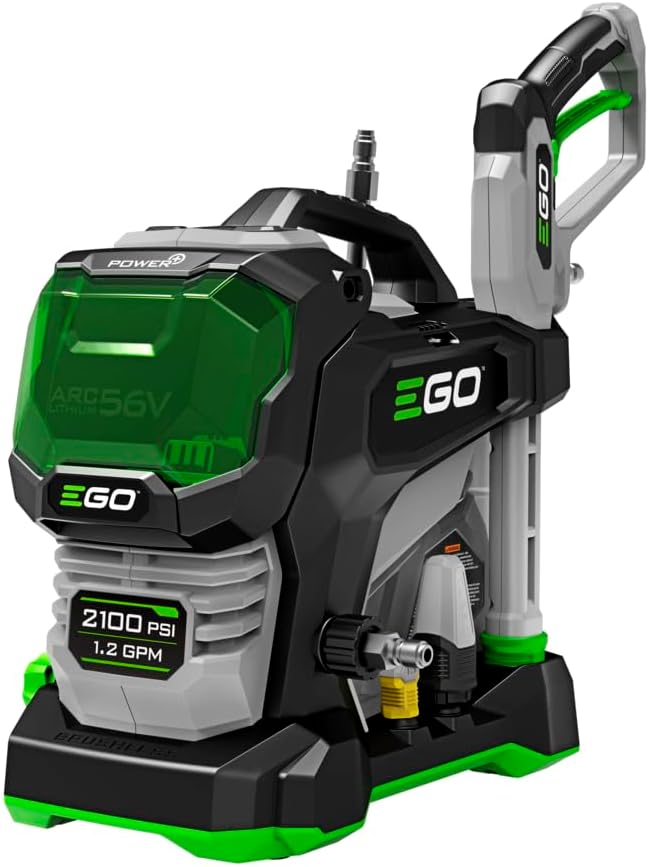
In situations where there is neither an outlet nor a tap, the EGO Power+ HPW2100 is the ideal cordless option.At this time, every washing machine is connected to a water supply and an electrical outlet. The HPW2100 splits the difference.The first thing you need is a 56-volt EGO battery, which can power it for up to 30 minutes with a 6.0 amp-hour pack.Now you can fill up any container with fresh water, be it a bucket, a barrel, or even a lake, using the attached siphon hose.
Lastly: a foam cannon, four nozzles, and a 25-foot line can achieve pressures up to 2100 PSI.Downside: you can’t buy the battery and charger together. Big things can’t be done in thirty minutes. The maximum flow rate is 1.2 GPM.Optimal for: Off-grid fencing, boats, and RVs powered by EGO batteries. Things you shouldn’t do: work in the driveway all day or don’t have EGO batteries.
1: Giraffe Tools Wall Mounted Pressure Washer Essential 100FT

For homeowners who are sick of lugging around a heavy machine, Giraffe Tools has created the best electric pressure washer: the Wall Mounted Essential.This procedure is standard for all other selections. Get it on wheels. Detangle the hose. Make it spotless. Rewind the coils.To start, it requires zero assembly; once mounted, it remains fixed to the wall. Not much to show.Our second product is an automatic rewind hose that is 100 feet long. Simply pull out the length you need, and the hose will wind itself back. Not a single washer around here does that.
Thirdly, the maximum flow rate is 2.2 GPM and the maximum pressure is 2900 PSI, both provided by an 1800-watt induction motor.In the fourth place, you’ll find a foam cannon, four quick-connect nozzles, and a hose that can be replaced—not the machine, but the hose.The most costly option here is a drawback. Mount it next to an outlet because the power cord is only 6 feet long. The 46.7-pound weight necessitates a sturdy wall.Who it’s best for: weekly washers who would want a hassle-free setup. People who clean away from the residence, such as renters, are not allowed.
Things to Consider Before Buying a Electric Pressure Washer:
Electric pressure washers have transformed how we handle outdoor cleaning tasks, making them efficient and accessible for homeowners. Selecting the right model requires careful thought about your specific needs and preferences. Various factors, such as power output, nozzle types, and ease of use, play critical roles in ensuring you make a suitable choice.
Light-Duty Handheld Models
Light-duty handheld models are perfect for small, quick cleaning tasks. Weighing significantly less than their larger counterparts, they can easily be maneuvered for jobs like washing cars or cleaning outdoor furniture. Usually featuring lower PSI ratings, these models offer sufficient power for straightforward applications without overwhelming the user. This convenience is particularly appealing for those who prioritize compact storage and easy handling.
Medium-Duty Residential Units
Medium-duty residential units strike a balance between power and ease of use. Capable of handling a wider variety of cleaning tasks, they typically feature higher PSI ratings, enabling them to tackle tough grime on driveways, decks, and patios. Versatility is a key aspect, allowing homeowners to effectively manage a range of chores without investing in multiple machines. These washers are often built to withstand regular usage, making them suitable for diligent homeowners.
Heavy-Duty Semi-Professional Designs
Heavy-duty semi-professional designs cater to more rigorous cleaning needs, often found in environments requiring consistent maintenance. These washers feature high PSI and GPM ratings, making them efficient for demanding tasks such as industrial cleaning or preparing surfaces for painting. Typically built with durable materials, they can endure the wear and tear of frequent use. Investing in one of these models means being prepared for serious jobs while still enjoying the benefits of electric power.
Pressure output (PSI) and water flow (GPM)
Balancing pressure output and water flow is essential for effective cleaning. PSI, or pounds per square inch, determines the force of the water stream, while GPM, or gallons per minute, indicates how much water flows through the nozzle. An ideal electric pressure washer should have a harmonious blend of PSI and GPM; for household tasks, a unit with around 2,000 PSI and 1.5 GPM suffices for most jobs, such as washing cars or cleaning patios. Higher values can expedite tougher projects.
Universal vs. induction motors
Choosing between universal and induction motors can greatly influence performance and longevity. Universal motors are lighter and often deliver higher RPMs, making them suitable for portable models. However, they typically have a shorter lifespan due to wear. Induction motors, while heavier and more expensive, provide quieter operation and increased durability. This difference can impact how frequently you use the washer and for what types of tasks, especially for more demanding cleaning jobs.
Hose length and nozzle versatility
Evaluating hose length and nozzle versatility is crucial for achieving efficiency and ease of use. A longer hose allows you to reach wider areas without constantly repositioning the washer, which is especially useful for tasks like cleaning driveways or siding. Additionally, multiple nozzles provide varied spray patterns, from wide fan sprays for rinsing to concentrated jets for stubborn grime. This adaptability ensures you can tackle diverse cleaning projects effectively without needing additional attachments.
Advantages of electric over gas models
Weight contributes significantly to ease of use. Electric pressure washers typically weigh less than their gas counterparts, making them easier to maneuver for various tasks. Moreover, the lack of harmful emissions makes these electric models more suitable for residential use, particularly in neighborhoods with strict regulations. Maintenance checks are minimal, without the need for oil changes or carburetor adjustments as seen in gas models, allowing users to focus more on the job at hand.
Common limitations and power constraints
Performance limitations often come into play with electric pressure washers. While sufficient for most household tasks, these models may struggle with tougher grime or larger cleaning jobs. Power constraints can also be a concern; electric units usually range from 1,300 to 2,000 PSI, which is adequate for cleaning decks and furniture but may fall short against deeply ingrained stains or large driveways. For more intensive cleaning requirements, a gas model may be necessary.
Cost-effectiveness and environmental impact
Budget-conscious buyers often find electric pressure washers appealing, as they generally present lower initial costs compared to gas models. Operating costs also favor electric units due to their energy-efficient nature. Furthermore, using electricity reduces environmental impact since these units generate no exhaust emissions. For those conscious of their carbon footprint, opting for an electric model can align financial benefits with sustainable practices, making it an attractive choice for eco-friendly consumers.
Assessing Your Primary Cleaning Surfaces
Identifying the surfaces you will clean is essential for selecting the right electric pressure washer. Consider materials such as wood, concrete, or composite decking, as specific pressure ratings are recommended for each. For instance, while wood may require lower pressure to avoid damage, hard surfaces like concrete can handle higher settings. Knowing the cleaning needs helps ensure the chosen model delivers effective cleaning without compromising surface integrity.
Setting a Realistic Budget Range
A clear budget allows you to narrow down options without frustration. Electric pressure washers can vary widely in price, from economical models suitable for light use to more expensive units designed for intensive applications. Assessing features you genuinely need, rather than opting for premium specifications, can help manage costs effectively. A budget review might reveal that a model at the lower end of your range still meets your requirements.
Comparing Brand Reliability and Reviews
Researching brand reliability is critical in avoiding dissatisfaction with your purchase. Customer reviews provide insight into model performance and user experiences, highlighting any recurrent issues or standout features. Checking warranty offerings is also beneficial; a brand that backs its products with a strong warranty signals confidence in their durability. A reliable brand typically garners a loyal customer base, further signaling its dependability.
Safe handling and electrical precautions
Ensure safe handling by following strict electrical precautions when operating your electric pressure washer. Always check that the outlet is grounded and suitable for the washer’s voltage requirements. Keep electrical cords out of water and away from any moving parts. Wearing rubber-soled shoes can help reduce the risk of electric shock. Disconnect the washer from the power supply when changing nozzles or performing maintenance to prevent accidental startup.
Proper nozzle selection for surface protection
Selecting the correct nozzle is essential for protecting various surfaces while using your pressure washer. Different nozzles have distinct spray patterns and pressure levels, which influence effectiveness. For example, a wide-angle nozzle works well on larger surfaces, reducing the risk of damage, while a narrow-angle nozzle provides a more concentrated stream for tough stains. Understanding the surface type-such as wood, concrete, or vinyl-will guide your choice and help prevent unintentional damage.
Winterization and pump preservation
Preparing your pressure washer for winter is essential to maintain its functionality through colder months. Begin by thoroughly running the machine until all water is expelled from the pump. Use a manufacturer-recommended antifreeze solution to protect internal components from freezing temperatures. Store the unit in a dry location, ensuring it is protected from moisture and extreme cold. A dedicated storage routine can extend the lifespan of your equipment significantly.
Final Words
Consider the applications and frequency of use when choosing an electric pressure washer. Assess features such as pressure ratings, flow rates, and accessories to ensure they align with your cleaning needs. A model with variable pressure settings, for instance, can cater to both delicate surfaces and tougher grime effectively. Evaluating customer reviews and warranty options also provides insight into reliability and support. Making an informed decision now will enhance your cleaning efficiency for years to come.
Leave a Reply