
Are you hunting for the best power bank to fuel your daily adventures? Nothing matches the terrifying panic of a dead battery when you need your phone most. A high-capacity portable charger gives you the ultimate freedom to stay connected anywhere. We tested the market to find reliable gadgets that offer lightning-fast speeds and massive battery life. Let’s explore the top winners for every budget.
Contents
- Top 5 Power Bank:
- 1. Anker 25,000mAh Portable Charger
- 2. INIU 20000mAh Portable Charger
- 3. charmast 10000mAh Portable Charger
- 4. VRURC 10000mAh Portable Charger
- 5. INIU 10000mAh Portable Charger
- Things to Consider Before Buying a Power Bank:
- Portable Power Banks
- Solar Power Banks
- Capacity and Output
- Size and Portability
- Advantages
- Disadvantages
- Compatibility
- Charging Speed
- Initial Setup
- Charging Devices
- Lifespan Extension
- Proper Storage
- Conclusion
Top 5 Power Bank:
1. Anker 25,000mAh Portable Charger
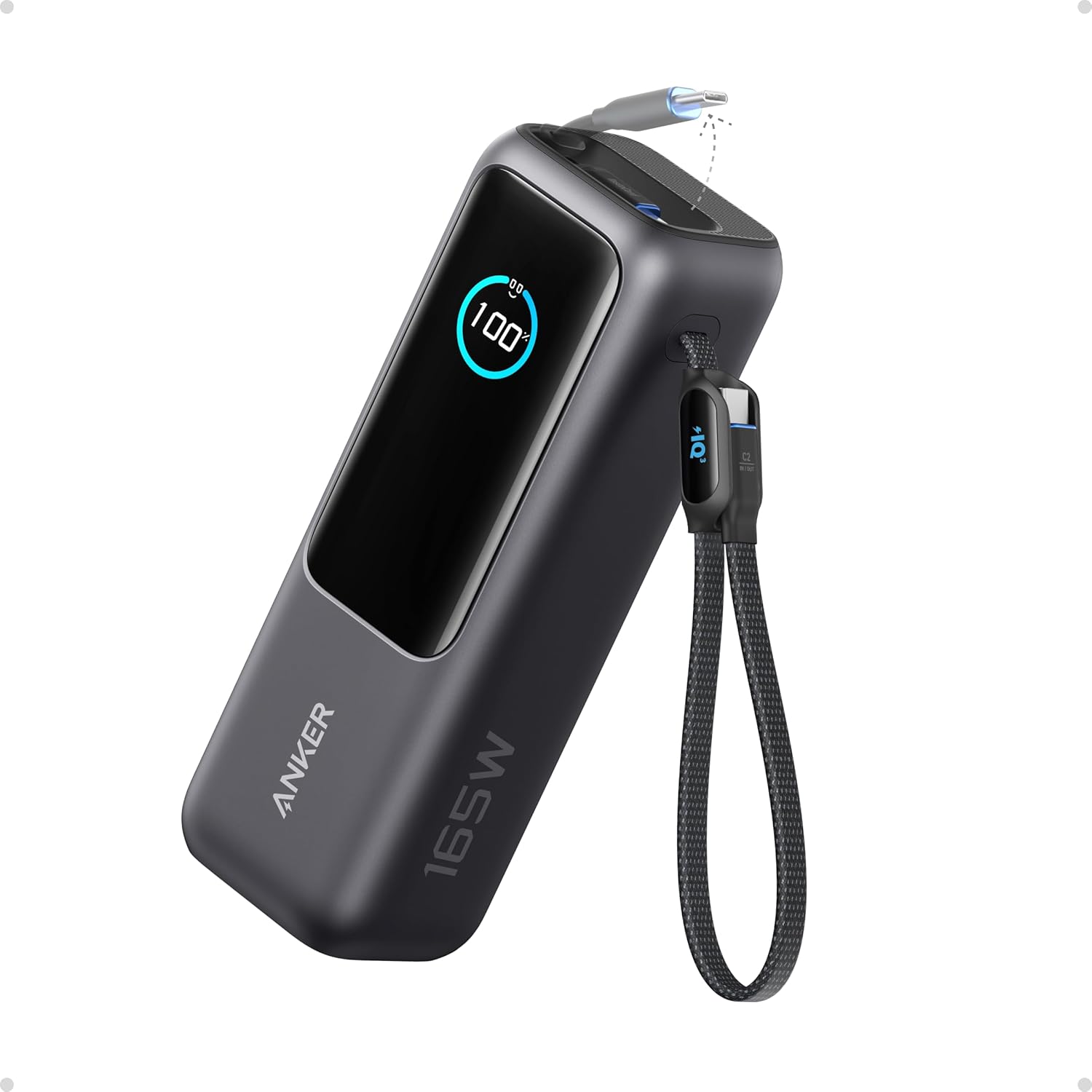
The Anker Portable Charger is designed to ensure that your entire setup, including your laptop and phone, is operational no matter where you are. Rather of having to prioritize one device over another, you can charge your MacBook and other devices simultaneously using the three USB-C ports, each of which can deliver up to 100W.
Long days, road trips, conferences, or travel are made possible by the massive 25,000mAh capacity. You won’t have to worry about finding outlets in public places like airports or cafés because you can charge your laptop multiple times and still have enough juice to run your other electronic devices.The 100W ultra-fast recharging feature will have you back up and running in no time when the power bank runs out of juice. Ideal for those brief intervals in between meetings or while you get a coffee, it only takes 22 minutes to charge it to approximately 30% capacity.
Reducing the amount of cords you need to carry about, the built-in cable ensures that you never be without a charging lead. To avoid guesswork and maximize efficiency, the digital display shows you the current charge status and remaining power.You may easily incorporate this high-capacity, fast-charging power bank into your travel and daily routine if you desire a gadget that can truly enable multitasking with your laptop and other devices.
2. INIU 20000mAh Portable Charger

The INIU Portable Charger is designed to keep your devices powered without impeding your speed, which is ideal if you depend on your phone and iPad for daily tasks. The enhanced 22.5W output and cutting-edge fast-charging technology allow you to fully charge your phone in only 30 minutes, making it ideal for those brief intervals in between meetings, classes, or running errands.
In contrast to other power banks, this one can adequately charge tablets. In just 30 minutes, it can increase the power of your iPad Pro by as much as 34%, providing a noticeable surge rather than a gradual gradual increase. When you’re not near an electrical outlet, you’ll have more time to read, work, stream, or take notes.
You won’t feel bogged down when you toss it inside a bag or jacket because to its lightweight design and 20,000mAh capacity. You can see exactly how much juice is left and when to charge it thanks to the digital display’s clear percentage indication.Whether you’re on the go, walking to the car at night, or experiencing a power outage, the included flashlight makes your charger multipurpose and useful.This INIU power bank is the perfect everyday accessory if you’re looking for a portable charger that can fully charge your iPad and restore your phone in a matter of minutes.
3. charmast 10000mAh Portable Charger
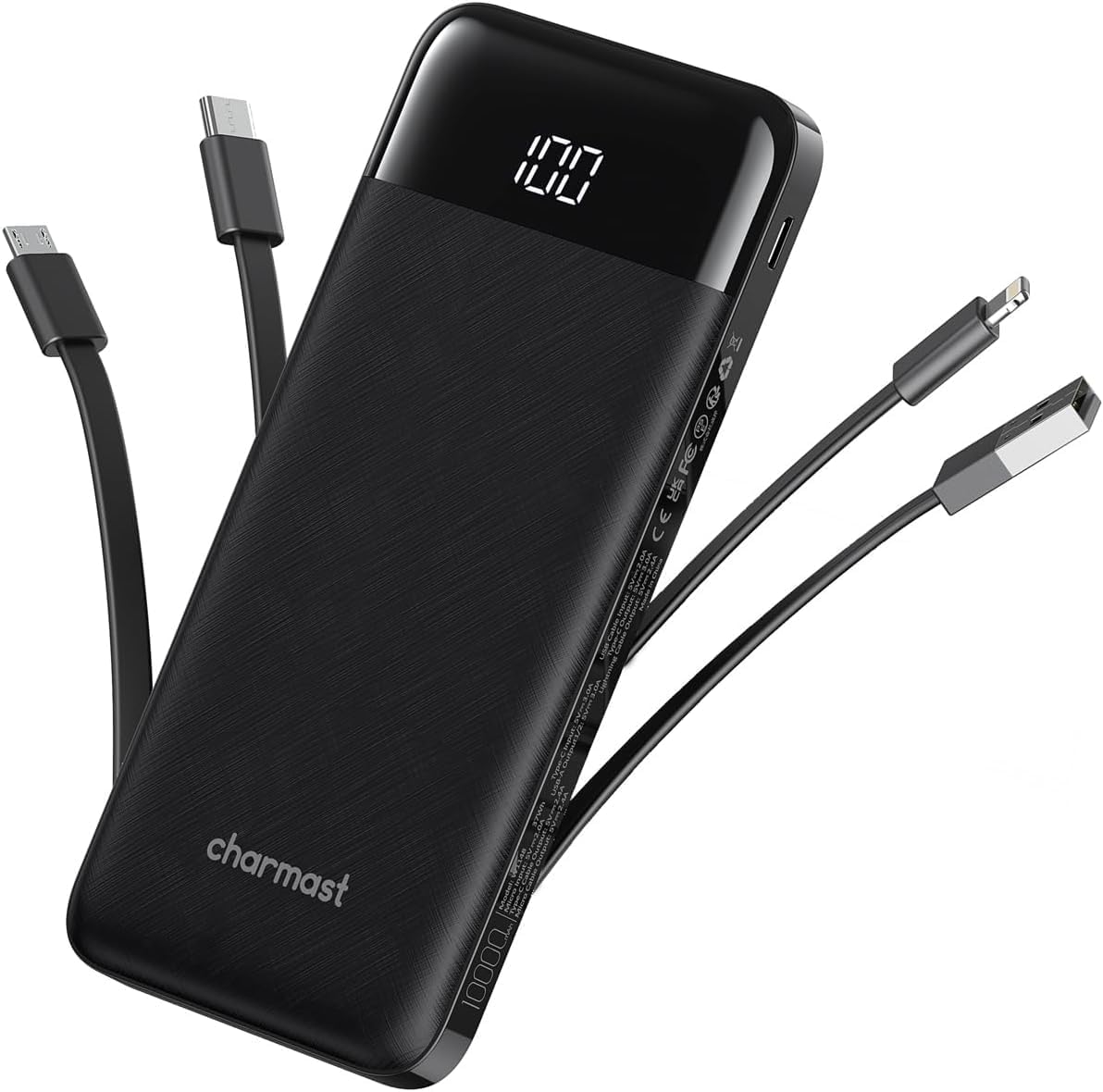
The charmast Portable Charger is here to save the day if you’re sick of lugging about a bunch of cords. The power bank has four integrated cables and a 10,000mAh capacity, so you can charge nearly any device—iPhone, iPad, Samsung, USB-C phones and tablets, and even older Micro-USB devices—without taking it out of your bag.
If you frequently help friends and family top up their phones or if you typically carry several devices, you will appreciate the six outlets that allow you to charge up to six devices simultaneously. The power bank may be recharged via any of three available inputs, allowing you to use any cable you happen to have on hand.
Its pliability belies its small and lightweight design; it’s roughly the thickness of a little larger smartphone, making it easy to carry in a pocket, handbag, or backpack.You won’t have to wonder if there’s enough juice to get you through the day because the digital LED display shows the remaining %. When charging is finished or no device is attached, the power bank and your gadgets are both protected by the auto shut-off feature.
This charmast power bank is an excellent choice if you’re looking for a multi-function portable charger that can charge practically all of your favorite devices without adding extra cords to your backpack.
4. VRURC 10000mAh Portable Charger

The VRURC Portable Charger can power many devices simultaneously, which is great if you have a lot of devices and don’t like waiting for them to charge one by one. You can charge five devices at once with a 10,000mAh battery and five output ports, each of which can offer up to 5V/2.4A. Your phone, earphones, watches, and other devices can all receive a boost simultaneously, which is a huge time saver.
Because of its small size and low weight (about 9.17 oz), it is perfect for carrying around in a purse or pocket. An extra layer of versatility is provided by the supplied portable lanyard. It can be hung from your backpack for easy access, and when you remove it, it functions as a Micro USB charging cable, ensuring that you always have a backup cord on hand.
The smart LED display makes it easy to see what percentage of battery life is left, so you can plan your use and charge the power bank in advance to avoid running out of juice. Guesswork based on a few flashing lights is over.
A top-notch smart chip safeguards the power bank and your gadgets from overcharging, overvoltage, overcurrent, and short circuits.This VRURC power bank is perfect for those times when you need a portable charger that won’t take up too much room in your bag but can charge many devices simultaneously.
5. INIU 10000mAh Portable Charger
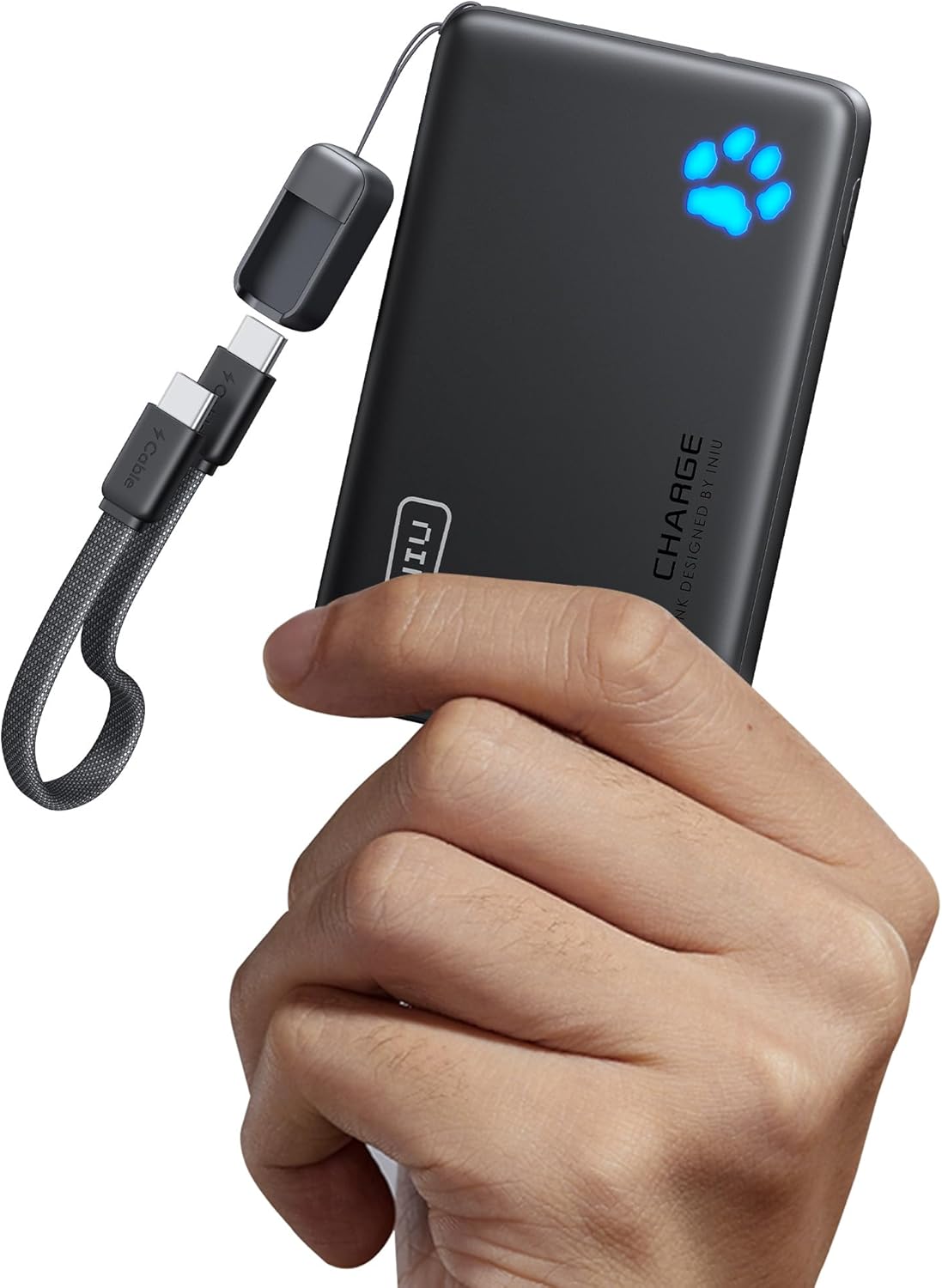
Designed with you in mind, the INIU 10,000mAh Portable Charger is a power bank that is both lightweight and powerful enough for everyday usage. With INIU’s TinyCell high-density battery, you can enjoy a full 10,000mAh capacity in a charger that is nearly 30% smaller and 15% lighter than competing models. This means it won’t feel cumbersome in your pocket, sling bag, or travel pouch.
Part of the design is to ensure safety. You can trust plugging in your favorite devices wherever you are because to INIU’s emphasis on high-grade materials and safe fast-charging technology, which has attracted over 38 million customers globally.When power is at a premium, the integrated 45W chip ensures you don’t have to sacrifice speed. In the time between meetings, flights, or classes, you may swiftly get out of the danger zone by charging an iPhone 15 to 60% in just 25 minutes.
The adaptability of its ports is the charger’s true selling point. With two USB-C ports—one for input and one for output—and one USB-A port, you’re well-equipped. With the same USB-C cables you already own, you can charge the power bank and your devices simultaneously, and in an emergency, you can even power three devices at once.
Featuring a built-in flashlight for late-night hikes, emergencies, and useful indication lights, this power bank is more than just backup power—it’s a smart everyday travel companion. Its tiny paw-print form adds to its appeal.
Things to Consider Before Buying a Power Bank:
Powerbank selection should focus on capacity, output power and compatibility so you can choose a model that charges your devices reliably. Check mAh rating versus your device needs, output wattage and fast‑charge protocols (PD, QC), port types and number, pass‑through and recharging time, build quality and safety protections, and brand warranty to ensure your power bank fits your travel, daily carry and emergency requirements.
Portable Power Banks
You’ll favor portable power banks when you need light, pocketable backup: typical 5,000-20,000 mAh units weigh 100-400 g and provide 1-4 full phone charges depending on device efficiency. Many house 18-30W USB-C PD outputs and 5-12W USB-A ports; for example, a 10,000 mAh PD bank often recharges a modern phone from 0-50% in 20-30 minutes. You should prioritize actual wattage and physical size over marketing mAh alone.
Solar Power Banks
You can use solar power banks for camping and emergencies, where plug access is limited; typical integrated panels are 2-5W, so they act as trickle chargers rather than full replacements. A 10,000 mAh (≈37 Wh) unit with a 2W panel needs many hours of direct sun, while a 5W panel shortens that time but still lags wall charging. Choose one with USB-C input if you want faster wall top-ups when available.
You should note practical solar performance: a 10,000 mAh bank (≈37 Wh) paired with a 2W panel may require roughly 18-25 hours of strong sun to fully recharge, whereas a 5W panel can reduce that to about 6-10 hours, factoring conversion losses; monocrystalline panels and an IP67 rating improve efficiency and weather resistance. For reliable results combine solar top-ups with wall or USB-C PD recharges, avoid fully relying on solar in cloudy conditions, and check cycle life (typically 300-500 cycles) and temperature specs to protect your battery.
Capacity and Output
You should match mAh to device needs: a 3,000-4,000 mAh phone will typically take one full charge from a 5,000 mAh pack and ~2 charges from 10,000 mAh after efficiency losses (60-80%). Prioritize output: 18-30W USB-C Power Delivery supports fast charging for phones and tablets, while 45W+ lets you top up some laptops. Check combined port wattage if you plan to charge multiple devices simultaneously.
Size and Portability
You’ll trade capacity for weight and pocketability: a slim 5,000-10,000 mAh pack often weighs 120-250 g and fits a pocket, whereas 20,000-30,000 mAh units usually run 350-600 g and live in a bag. Airlines limit most carry-on batteries to 100 Wh (~27,000 mAh at 3.7V) without approval; units above 160 Wh are not allowed. Prioritize what you carry daily.
Consider form factor details: thickness, dimensions and materials affect how you carry the bank-aluminum shells improve heat dissipation but add weight, while plastic cuts grams. If you commute, a 10,000-15,000 mAh slim pack with integrated cable and 18W PD is a practical compromise; for multi-day trips, a 20,000-30,000 mAh brick with cable management and 30-60W PD gives versatility. Test fit and weight against your routine before buying.
Advantages
You can choose a compact 10,000mAh pack (~200-250g) for pocket convenience or a 20,000mAh+ unit for multi-day trips; USB-C PD at 18-30W often restores 50% battery in ~30 minutes on modern phones and can run tablets or laptops for an hour-plus, giving you reliable on-the-go power, flexible port options, and clear performance metrics when you pick reputable brands and certified cells.
Disadvantages
You may face heavier carry weight with higher capacity units and slower recharge times-20,000mAh packs (≈74Wh) can take many hours to refill unless they support high-input PD, while airlines restrict power banks above ~100Wh (~27,000mAh) in checked luggage; additionally, low-priced models often overstate capacity and can lack adequate safety protections.
In practice, advertised mAh is measured at the cell voltage (3.7V), so a 20,000mAh rating equals about 74Wh, which converts to roughly 14,800mAh at 5V USB output before losses; after conversion inefficiencies (typically 80-90%) usable capacity can drop to ~12,500mAh, explaining why you get fewer full charges than expected. You should also consider cell cycle life-most lithium packs fall to ~80% capacity after 300-500 full cycles-and poor-quality packs increase risk of overheating or failure due to inadequate protection circuits.
Compatibility
Verify outputs match your devices: many phones accept 5V/3A, 9V/2A or PD profiles, while tablets and laptops often need 30-65W. If you own an iPhone, pair a USB-C PD bank with a USB-C-to-Lightning cable for fastest results; if you use a USB-C laptop, confirm the bank supplies the required wattage (for example, many ultraportables expect 30-65W). Also ensure firmware updates or vendor notes that list supported devices.
Charging Speed
Charging speed depends on both the protocol and wattage the bank can deliver. You should opt for USB Power Delivery (PD) or Quick Charge if you want rapid top-ups-PD at 18-30W typically brings many phones to ~50% in 20-35 minutes, while 45-65W banks speed up tablets and some laptops. Use high-quality USB-C cables to avoid bottlenecks.
Wattage is volts times amps, so a 30W PD bank (for example, 15V×2A) will outpace an 18W unit. You must note that device and bank negotiate the charging profile, so a phone capped at 20W won’t draw 45W from a 65W bank. Heat triggers thermal throttling during sustained charging, reducing speeds, and advertised wattage is often a total across ports-if you charge two devices simultaneously per-port output can fall, so check per-port ratings and cable specs.
Initial Setup
First, fully charge the pack using a 2-3A wall charger-10,000mAh units usually take 4-6 hours, 20,000mAh about 6-8 hours. Verify all LED bars light up and confirm the pack discharges by charging one device to ~50%; that validates usable capacity (typical efficiency 60-70%). Keep the manual and warranty card, and store the unit at ~40-60% charge if not using it for months to protect battery health.
Charging Devices
Start by identifying which port supports Power Delivery (PD) or Quick Charge: use PD 18-30W for phones like iPhone 12 (about 50% in 30 minutes on 18W) and 30W+ for thin laptops. Use the device’s original cable when possible; a poor cable can bottleneck charging speed. Disconnect devices once they reach full to minimize unnecessary cycles.
When charging multiple devices, expect reduced per-port power-if a pack advertises 45W total across three ports, a single device might get the full 45W only when alone. Also factor in conversion loss: a 20,000mAh pack typically delivers ~12,000-13,000mAh usable, so it will recharge a 3,000mAh phone roughly 3-4 times depending on efficiency, cable quality, and device draw.
Lifespan Extension
To extend your power bank’s life, keep its charge between 20% and 80% when possible. Most lithium‑ion cells endure about 300-500 full cycles; treating charges as partial can double usable cycles in practice. Use the supplied cable, avoid extreme heat above 40°C, and prevent full 0% drains-long discharges trigger protection circuits. Clean ports occasionally with a dry brush and avoid hard drops to reduce internal wear.
Proper Storage
Store your power bank in a cool, dry place around 15-25°C and under 60% humidity; avoid leaving it in a hot car where temperatures exceed 50°C. If you plan long gaps in use, top it to roughly 40-60% and check every 3 months, since batteries self-discharge about 2-5% monthly. Keep it away from metal objects to prevent short circuits.
During travel, carry the power bank in your cabin baggage and use an insulating pouch to buffer temperature swings; many airlines allow only batteries up to 100 Wh in carry‑on, which covers most 27,000mAh units (at 3.7V ≈ 99.9 Wh). For seasonal storage, recharge to ~50% every 3 months and place silica gel packets in the container to control moisture. If a unit won’t wake after storage, a short charge with a low‑amp (0.5-1A) charger often resets the protection circuit.
Conclusion
Taking this into account, weigh your priorities-battery capacity versus portability, charging speed and ports, device compatibility, safety features and build quality, warranty and price-to choose a power bank that fits your routine; by assessing real-world needs and reading reviews you ensure your device delivers reliable, safe power when you need it most.
Leave a Reply