
Finding the best rice cooker shouldn’t feel like a guessing game. If you are tired of scraping burnt pans or eating mushy sides, we have the solution. We tested reliable kitchen appliances that guarantee perfectly cooked grains for every family meal. You deserve effortless, fluffy rice without the daily struggle. Ready to banish dinner disasters forever? Let’s explore the top options available today.
Contents
- Top 5 Rice Cooker:
- 1. Zojirushi Micom 3-Cup Rice Cooker
- 2. Toshiba Mini 3-Cup Rice Cooker
- 3. COSORI 10 Cup Rice Cooker
- 4. CUCKOO Micom 6-Cup Rice Cooker
- 5. COMFEE’ Compact 4 Cup Rice Cooker
- Things to Consider Before Buying a Rice Cooker:
- Electric Rice Cookers
- Stovetop Rice Cookers
- Induction Rice Cookers
- Pressure Rice Cookers
- Capacity
- Cooking Functions
- Ease of Use
- Advantages
- Reading Reviews
- Checking Brand Reputation
- Understanding Warranty Options
- Storage Considerations
- Final Words
Top 5 Rice Cooker:
1. Zojirushi Micom 3-Cup Rice Cooker

The Zojirushi Micom 3-Cup Rice Cooker is an excellent choice for regular meals if you’re looking for a rice cooker that suits your kitchen and lifestyle. You can cook just half a cup of rice, so there’s no need to overcook it or waste food you don’t intend to eat. Quick mornings just got a whole lot easier with this handy appliance, because it can handle oats, too.
The menu options are specifically tailored to the types of food you typically prepare. Oats cooked on the Steel-Cut Oatmeal setting have a different cooking flow than those cooked on the regular porridge cycle, allowing them to cook more quickly without sacrificing texture or heartiness. The Brown Rice Activation setting is great for health-conscious eaters since it maximizes the nutritional value of brown rice by activating the grain and creating a more nutrient-dense bowl by keeping the inner pan at a temperature of approximately 104°F for approximately two hours prior to cooking.
And when long-grain rice is on the menu, the Long Grain White setting modifies the cooking time so that it mimics the behavior of long-grain grains, such as basmati or jasmine, which differ in cooking from short- or medium-grain rice. Less guesswork and more consistent results from your rice cooking.It is designed to be dependable, easy to live with, and ready anytime hunger strikes, with corded electric power and simple hand-wash upkeep.
2. Toshiba Mini 3-Cup Rice Cooker
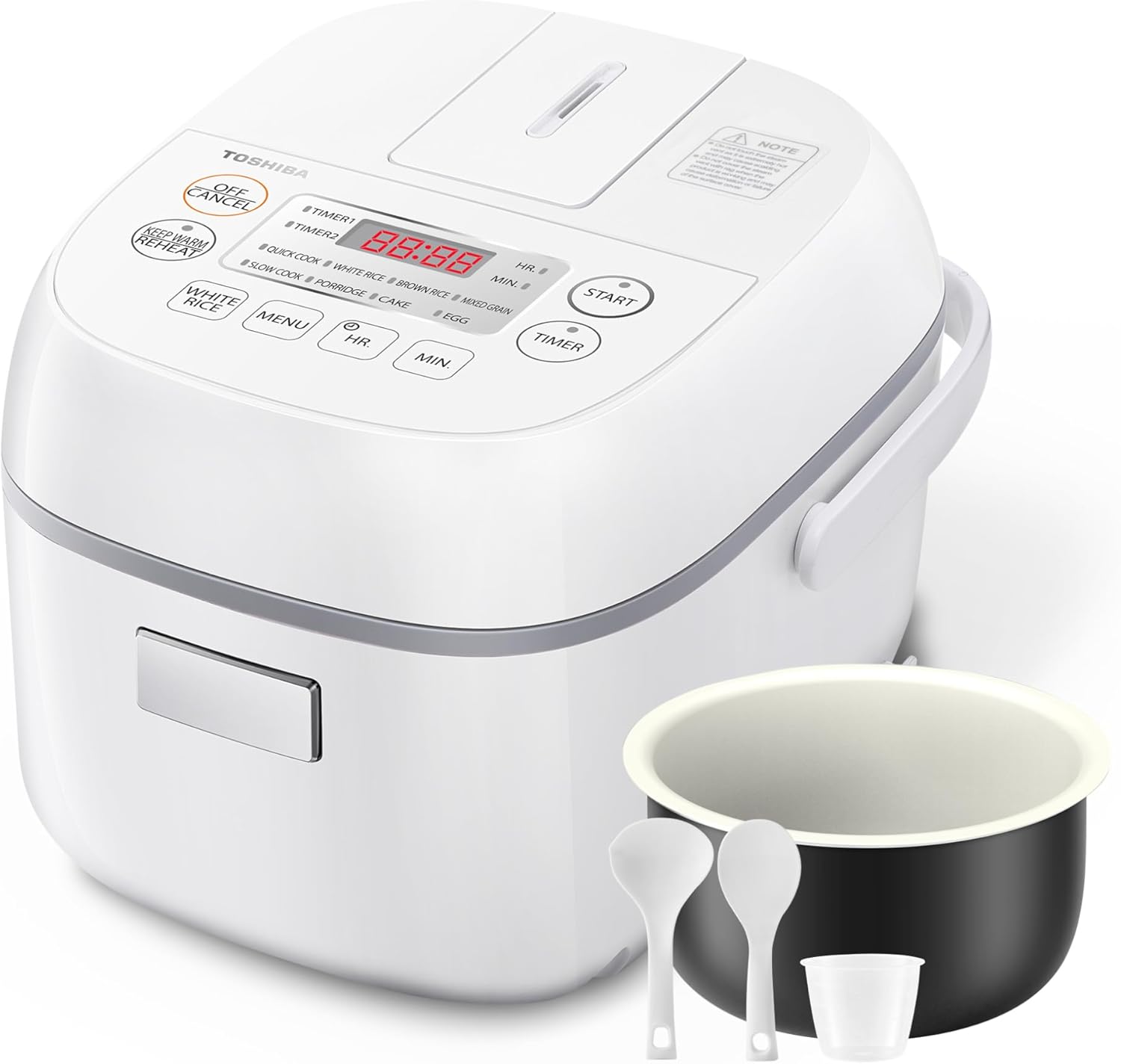
The Toshiba Mini 3-Cup Rice Cooker offers an incredibly versatile setup for everyday cooking, making it an ideal choice for those who desire a compact cooker capable of handling more than simply rice. You may transition from supper to breakfast (and even dessert) without taking out additional pots thanks to the 8 cooking functions: White Rice, Quick Cook, Brown Rice, Mixed Grain, Slow Cook, Porridge, Cake, and Egg. Cooking oats, stews, soups, and other one-bowl foods has never been easier than with this handy little device.
It may be small, but it packs a punch when it comes to variety. A wide variety of grains, including quinoa, mixed grains, oatmeal, and wild rice, as well as white, brown, sushi, basmati, and jasmine rice, are all within your culinary purview. Whether you’re cooking for two, a large family, or just a busy person who values reliable, quick meals, this is the perfect solution because it contains enough of food without taking up too much room on your counter.
Fuzzy logic cooking provides the actual ease. The cooker detects moisture and tailors the cooking temperature and duration to your recipe without you having to lift a finger. You can achieve uniformly cooked grains and rice with less experimenting, and the same clever tweaks work for other foods as well.With its corded electric power and easy-to-follow instructions, cleaning up after each meal is a breeze.
3. COSORI 10 Cup Rice Cooker

The COSORI 10 Cup Rice Cooker is an excellent choice for those who desire a reliable appliance that can handle hectic schedules and larger appetites. It simplifies meal preparation and ensures consistency in flavor. You are not limited to “one kind of rice” because it comes with 18 different cooking settings. If you’re looking for diversity in your cooking without breaking out the heavy pot, this multi-grain rice cooker has you covered with textures for both white and brown rice, as well as programs for steamed veggies, slow-cooked soups, grains, oats, sautéed flavored rice, and more.
In particular, fuzzy logic stands out. It uses a seven-step cooking procedure that adapts automatically to your food instead of relying on your best guesses about timing and temperature. That makes it easier to achieve fluffy, evenly cooked outcomes, regardless of your cooking experience, whether you’re just starting out or have been meal-prepping for years.
The 24-hour delay timer allows you to prepare supper at your leisure, and the 24-hour keep-warm function ensures that the rice stays at the perfect serving temperature for as long as you need it. On nights when you’re short on time but nonetheless want perfectly cooked white rice, the Quick Rice mode employs 1000W of power to expedite the cooking process.
Parts that can be washed in the dishwasher also make cleanup a breeze. In general, it’s a sensible pick for those days when you need consistent rice, a variety of meal alternatives, and a little less hassle in the kitchen.
4. CUCKOO Micom 6-Cup Rice Cooker

The CUCKOO Micom 6-Cup Rice Cooker is an excellent investment if you’re looking for a trustworthy appliance that can accommodate both regular meals and larger quantities for entertaining. You won’t need to run numerous cycles to prepare enough uncooked rice for family dinners, meal prep, or gatherings thanks to the 6-cup capacity. To help you get going quickly and maintain uniform quantities, it comes with a measuring cup and a rice spatula.
Also, plain old white rice isn’t off the table. You may produce a wide range of foods in this versatile cooker, including oats, sticky white rice, brown rice, and even baby food for those times when you want something light and easy to digest. Quick weeknight bowls, healthier grain meals, or softer foods for tiny ones—you can adapt your cooking to your routine with the help of the changeable settings and simple controls.
When you cook frequently, it’s important that cleanup be easy. Thanks to the removable top and non-stick inner pot, even the most inaccessible areas can be easily reached, and even the most tenacious sticking can be avoided. So that your cooker is always ready for the next batch, it has a self-clean mode that helps refresh the inside between uses.You receive consistent results with less kitchen bother because to the dependable corded power and user-friendly design. This is particularly helpful if rice is a regular part of your meals.
5. COMFEE’ Compact 4 Cup Rice Cooker

Designed to simplify cooking for small meals, the COMFEE’ Compact 4 Cup Rice Cooker is a space-saving appliance that yet covers all of your everyday necessities. To save you the trouble of handling many pots, it has six computerized one-touch programs that allow you to cook quinoa, oatmeal, steam, brown rice, steam, and white rice, among other things.
The 8-cup cooked capacity is more than enough for a couple servings, a fast lunch, or supper side dishes, especially considering how little it is. Perfect for solo cooks, couples, or anybody looking for a sturdy stovetop appliance that won’t take up too much room on your counter.A digital panel and an LED screen make using it easy. When you hit the start button after selecting a program, the cooker will switch to keep warm mode automatically for up to twelve hours. You may organize your meals around your schedule with the 12-hour delay timer, so food is ready when you need it.
We made sure that cleanup would be easy. The non-stick inner pot and stainless-steel exterior make cleanup a breeze. Plus, you won’t have to wash the inner pot or any of the accompanying accessories by hand; they’re dishwasher safe.With its cool-touch handle, BPA-free food-grade materials, and overheating protection, you can open and carry it with confidence. Cooking and cleanup are both made easier with this daily cooker.
Things to Consider Before Buying a Rice Cooker:
This guide helps you evaluate capacity, cooking programs (white, brown, porridge), heating technology (fuzzy logic vs. induction), build quality, inner pot material, ease of cleaning, programmable timers, energy use, and warranty so you choose a model that fits your household size, budget, and cooking habits. Consider extra functions like steaming or slow-cooking and how simple controls and reliable customer support will affect your everyday use.
Electric Rice Cookers
You’ll find electric models in most kitchens because they automate timing and warming; a typical 5-cup cooker (uncooked) consumes ~400-700 W and delivers consistent white or brown rice with 1-3 preset modes, while premium fuzzy-logic variants adjust heat curves to salvage slightly uneven rice batches.
Stovetop Rice Cookers
You get a rugged, low-tech solution with stovetop cookers: heavy-gauge aluminum or stainless steel pots that require manual heat control and about 15-30 minutes cooking time, ideal if you want a durable unit for camping or simple kitchens without relying on electronics.
When you use one, monitor flame and learn the steam-release rhythm: thin short-grain rice often needs 12-15 minutes on medium-low, while brown or wild mixes can take 30+ minutes and benefit from a 10-minute resting period off heat to steam evenly.
Induction Rice Cookers
You’ll notice induction models give the tightest temperature control by heating the inner pan directly via electromagnetic fields, often reaching temperatures more uniformly than standard electric units, which produces cleaner separation of grains-handy for sushi rice where texture matters.
In practice, this means you can rely on precise cycles: for instance, a high-end IH unit may extend a brown rice cycle by 10-15 minutes but yield 20-30% better chew and evenness, making it worth the premium if you cook rice daily.
Pressure Rice Cookers
You benefit from faster cooking and deeper flavor extraction with pressure rice cookers, which trap steam and raise internal pressure to cut typical brown rice times by roughly 40-70%, so grains hydrate faster and legumes or mixed-grain dishes finish in a single cycle.
Operationally, you should allow a natural pressure release for 5-10 minutes on delicate grains to avoid mushiness, inspect gaskets every 12-18 months, and note that pressure models often combine safety valves and locking lids that add maintenance but improve consistency when you cook dense or whole-grain rice regularly.
Capacity
You should match capacity to household size: 3‑cup uncooked models suit 1-2 people, 5-6 cup uncooked covers a family of 3-4, and 8-10 cup uncooked handles meal prep or larger families; note that 1 cup uncooked rice yields roughly 2-3 cups cooked, so pick a slightly larger cooker if you host or batch-cook weekly.
Cooking Functions
You’ll find basic cook/keep-warm on budget units and advanced functions-fuzzy logic, induction heating (IH), steam, porridge, brown/mixed-grain and quick-cook-on mid to high-end models; brands like Zojirushi and Tiger emphasize fuzzy logic and IH for superior texture control.
Fuzzy-logic models adjust temperature and time in real time using microprocessors to compensate for grain type and ambient conditions, improving consistency; IH models use electromagnetic heating for faster, more even heat and are often priced 2-3× above basic units, making them ideal if rice texture and versatility are priorities.
Ease of Use
You want simple controls, clear displays, a reliable timer/delay start and removable parts for cleaning; one-touch operation is invaluable for morning routines, while intuitive presets reduce mistakes when cooking porridge, sushi rice or mixed grains.
Check for a removable inner lid and steam vent, dishwasher-safe lids or bowls, and tactile buttons or backlit LCDs-nonstick pots ease cleaning but can scratch and may need replacement sooner, whereas stainless-steel inner pots resist wear but may require more scrubbing.
Advantages
You get reliable results and convenience: fuzzy-logic or induction models adjust heat so you consistently get fluffy rice, with white rice ready in about 20-30 minutes and brown in 40-50. You can set timers or delay start up to 24 hours, choose sizes from 3 to 10 cups to match household needs, and typically use 300-700W – often more efficient than repeatedly reheating on the stovetop.
Reading Reviews
Scan both high- and low-rated reviews and focus on patterns: if 200+ users repeatedly praise texture consistency or cite a heating failure after a year, that tells you more than a single glowing note. Pay special attention to comments about rice doneness, steam vent clogging, and longevity under daily use. Filter by verified purchases and look for video or photo evidence to verify claims about performance and cleaning.
Checking Brand Reputation
Compare established manufacturers like Zojirushi, Tiger, and Panasonic with newer or budget labels for service history and product longevity. You should check how long a brand has produced rice cookers, where units are manufactured, and whether replacement parts (inner pots, lids, gaskets) remain available. Higher-end brands often earn higher resale value and longer-lived components.
Investigate independent tests from Consumer Reports or cookware blogs, note awards or certifications, and search forums for multi-year ownership reports; for example, many owners report Zojirushi models lasting 5-10 years with daily use while budget units often show issues within 1-2 years. Check repair-center networks and spare-part pricing to estimate lifetime ownership costs.
Understanding Warranty Options
Read the fine print: standard warranties typically cover 1 year, mid-range models 2 years, and some premium offerings up to 3 years-coverage may exclude wear items like inner pots or nonstick coatings. You should register the product to validate warranty, keep receipts, and verify whether shipping or labor is included for repairs. Extended warranties can be worthwhile if parts are expensive.
Confirm whether the warranty is honored by the manufacturer or the retailer, ask about turnaround time for repairs, and check whether authorized service centers are local to you; if a heating element fails after 18 months, having a nearby service partner avoids long downtime. The warranty terms and after-sales support often determine long-term value.
Storage Considerations
If you use your rice cooker daily, keeping it on the countertop saves time; if used less than once a week, store it in a cool, dry pantry. Always store with the inner pot removed and dry; coil the power cord loosely and keep accessories in the cooker’s cavity to avoid misplacement. In humid climates, add a silica gel packet and check metal parts for rust every 3 months.
During long-term storage beyond six months, fully clean and descale parts, wrap the inner pot in a paper towel to protect the coating, and store the cooker upright with the lid slightly ajar to prevent stale odors. You should avoid placing it near heat sources above 40°C or under heavy items that can dent the base; in coastal areas inspect electrical contacts every three months for corrosion.
Final Words
From above, weigh your typical portions, counter space, budget and desired features like fuzzy logic, induction or steaming; prioritize capacity, ease of cleaning and reliability. Choose a model that matches how often you cook and how much control you want, check warranties and reviews, and balance advanced functions against simplicity so your rice cooker becomes a dependable part of your kitchen routine.
Leave a Reply