
Are you exhausted from chasing dust bunnies every day? Finding the best robot vacuums can instantly turn your cleaning chores into effortless freedom. We tested top-rated models to help you banish pet hair and crumbs forever. You deserve a sparkling home without the back-breaking work. Ready to upgrade your smart home setup? Let’s explore the most reliable automated cleaners worth your money this year.
Contents
- Top 5 Robot Vacuums:
- 1. eufy E25 Robot Vacuum
- 2. roborock QV-35A Robot Vacuum
- 3. Shark AI Ultra Voice Control Robot Vacuum
- 4. iRobot Roomba 105 Vac Robot Vacuum
- 5. roborock Q7 M5+ Robot Vacuum
- Things to Consider Before Buying a Robot Vacuum:
- Autonomous Robot Vacuums
- Hybrid Robot Vacuums
- Floor Type Compatibility
- Battery Life and Charging Options
- Evaluating Brand Reputation
- Advantages of Using a Robot Vacuum
- Disadvantages to Keep in Mind
- Researching Features
- Troubleshooting Common Issues
- To wrap up
Top 5 Robot Vacuums:
1. eufy E25 Robot Vacuum

Designed for hands-free whole-house cleaning, the eufy E25 can handle pet hair and mopping without adding extra task to manage. Whether you’re cleaning hard floors or carpets, this vacuum cleaner has you covered with an integrated station that takes care of the mundane tasks you usually have to do, such emptying the trash can, washing the roller mops, restocking water, and drying parts with hot air to keep them fresh in between uses.
With the HydroJet technology, you may mop with self-cleaning roller mops that can refresh themselves as fast as two times per second. This ensures that the mop performs consistently from one room to the last and helps you avoid the usual issue of unclean water spreading throughout the house.
Turbo suction of up to 20,000 Pa is available for use when vacuuming, allowing for the removal of even the most embedded dust, crumbs, and fur from hard floors and carpets. You may spend less time removing hair from the brushroll and more time enjoying clean floors with the DuoSpiral anti-tangle brushes, which are ideal for houses with pets because they resist hair wrap and clogs.
A CornerRover arm follows walls and corners to clean the edges more thoroughly, an area where debris tends to hide. The ability to avoid obstacles allows the robot to move more freely around commonplace objects. Staying up-to-date with the firmware in the app is key to unlocking enhancements and ensuring reliable cleaning for optimal long-term performance.
2. roborock QV-35A Robot Vacuum

With the roborock QV-35A, you may enjoy a hands-free routine that effectively removes pet hair, daily detritus, and sticky floor issues. 8000Pa HyperForce suction removes deep-seated filth and hair from carpets and rugs, as well as dust and crumbs from hard floors and tight spaces.
With the all-in-one docking station, you won’t have to worry about the dirty work, which means less maintenance. For longer coverage, it automatically empties the robot into a sealed 2.7L bag that may last about 7-9 weeks. To prepare for the next run, it washes and dries the mopping pads and replenishes the water tank from a 4L reservoir.
Another typical source of aggravation, particularly for pet owners, is hair wrap. To maintain suction flowing and minimize hair tangling, the QV-35A employs a tangle-free brush system. This system consists of an updated side brush and a main brush made of complete rubber spirals.
The navigation is deliberate and astute.
It can avoid becoming trapped on stairs or in confined spaces because to its Reactive Tech obstacle avoidance and precise mapping capabilities, which allow it to identify and navigate past cords, shoes, and furniture. When it’s time to mop, the two spinning pads work together to scour the floor quickly and efficiently. The water level may be adjusted to suit different types of floors. You can clean a variety of surfaces in a single scheduled run thanks to the 10mm mop lift, which allows it to glide across low-pile carpets without leaving wet tracks.
3. Shark AI Ultra Voice Control Robot Vacuum
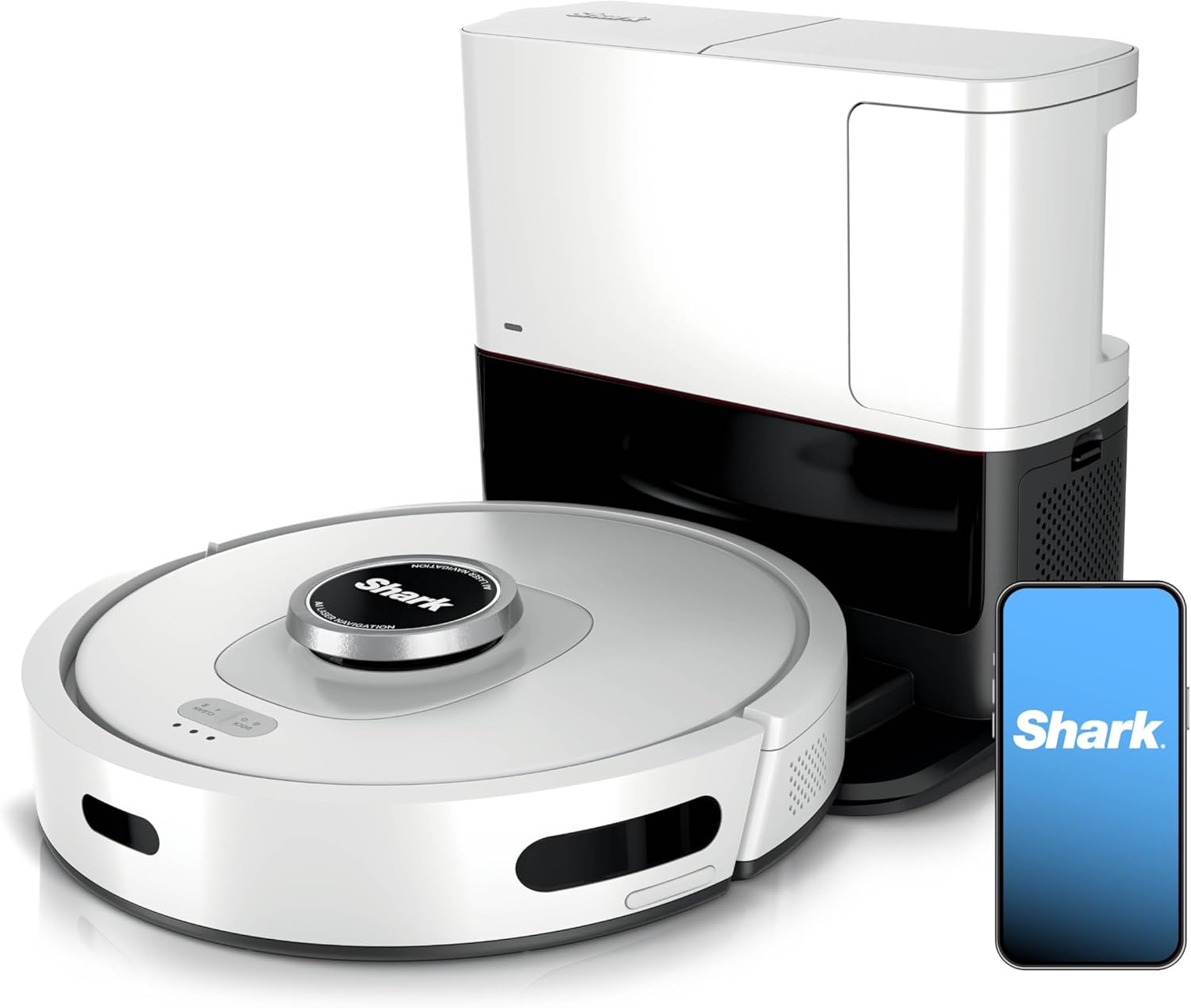
The Shark AI Ultra Voice Control Robot Vacuum is an excellent choice for those who want a hands-free approach to cleaning their floors, since it effortlessly handles daily messes and pet hair without requiring continual attention. From light dust to larger crumbs and tracked-in dirt, it can handle it all thanks to its powerful Shark suction that works on both hard and carpeted floors.
Matrix Clean utilizes a precision grid design to thoroughly cover surfaces by doing repeated passes over them. This enhances pickup in high-traffic areas, around baseboards, and near furniture, and helps decrease missed strips.
You won’t believe how convenient the bagless self-emptying base is. No need to empty the bin after each run because it may retain dirt and debris for up to 60 days. You also won’t have to worry about the expense of replacement trash bags because it’s bagless.
The self-cleaning brushroll makes pet hair care a breeze. In order to maintain consistent performance between cleanings, it is designed to firmly grip hard floors, burrow into carpets, and resist hair wrap while simultaneously lifting more hair.
And the navigation is both clever and systematic. The robot can scan your home in a flash using 360-degree LiDAR scanning, create an accurate map, and clean more efficiently—day or night—by identifying and avoiding obstacles in its way. Your floors will always be clean, even on the busiest days, thanks to the app’s voice compatibility and cleaning capabilities. You may start cleanings, change routines, or create schedules.
4. iRobot Roomba 105 Vac Robot Vacuum
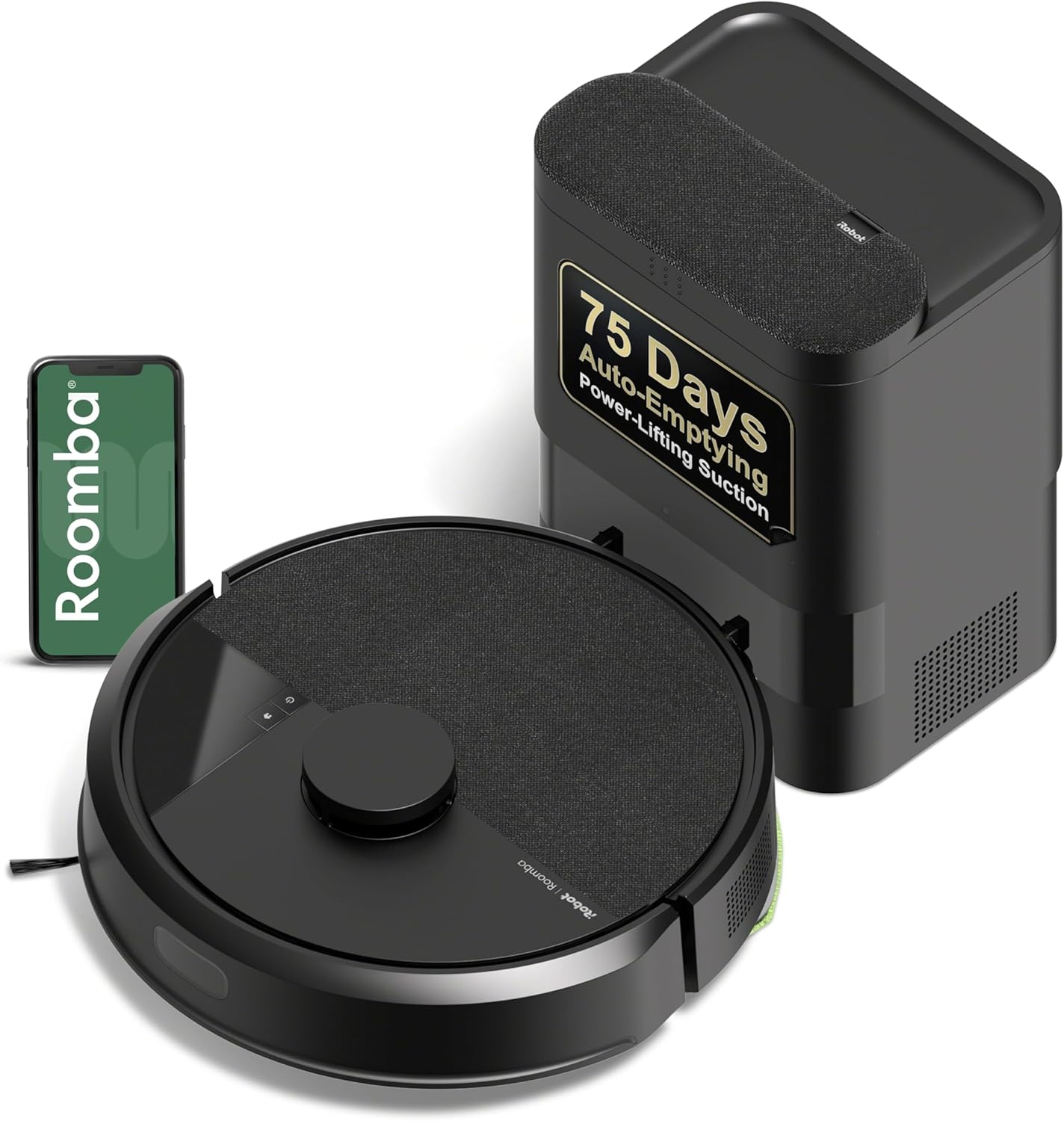
The iRobot Roomba 105 Vac is designed for hands-free maintenance, so you can enjoy cleaner floors without the daily burden of emptying the robot vacuum. Using a throwaway bag that captures 99% of allergens as tiny as 0.7 microns, it automatically empties into the AutoEmpty dock. That makes it easier to change the bag—no more tracking dust around—just empty the bag, throw it away, and replace it.
The three-stage cleaning technology of the Roomba is powerful enough to clean hard floors as well as carpets. An edge-sweeping brush aids in the removal of dust and crumbs from corners and along baseboards, in addition to a powerful power-lifting suction and a multi-surface brush for common household detritus. It’s an efficient arrangement for dealing with tracked-in filth, crumbs from the kitchen, or that fine dust that accumulates in heavily populated places.
Using the Roomba Home app, controlling the vacuum remains easy. If you have a specific room or areas that need more attention than others, you can schedule the robot to clean only that room, change the suction level, select the number of passes it performs, and target that room specifically. Another option is to designate certain locations as “no-go zones,” such as around pet bowls or crowded corners. Spot cleaning, which isolates a specific area for up to five minutes, is another option for stubborn messes that don’t require a full-size vacuum.
5. roborock Q7 M5+ Robot Vacuum
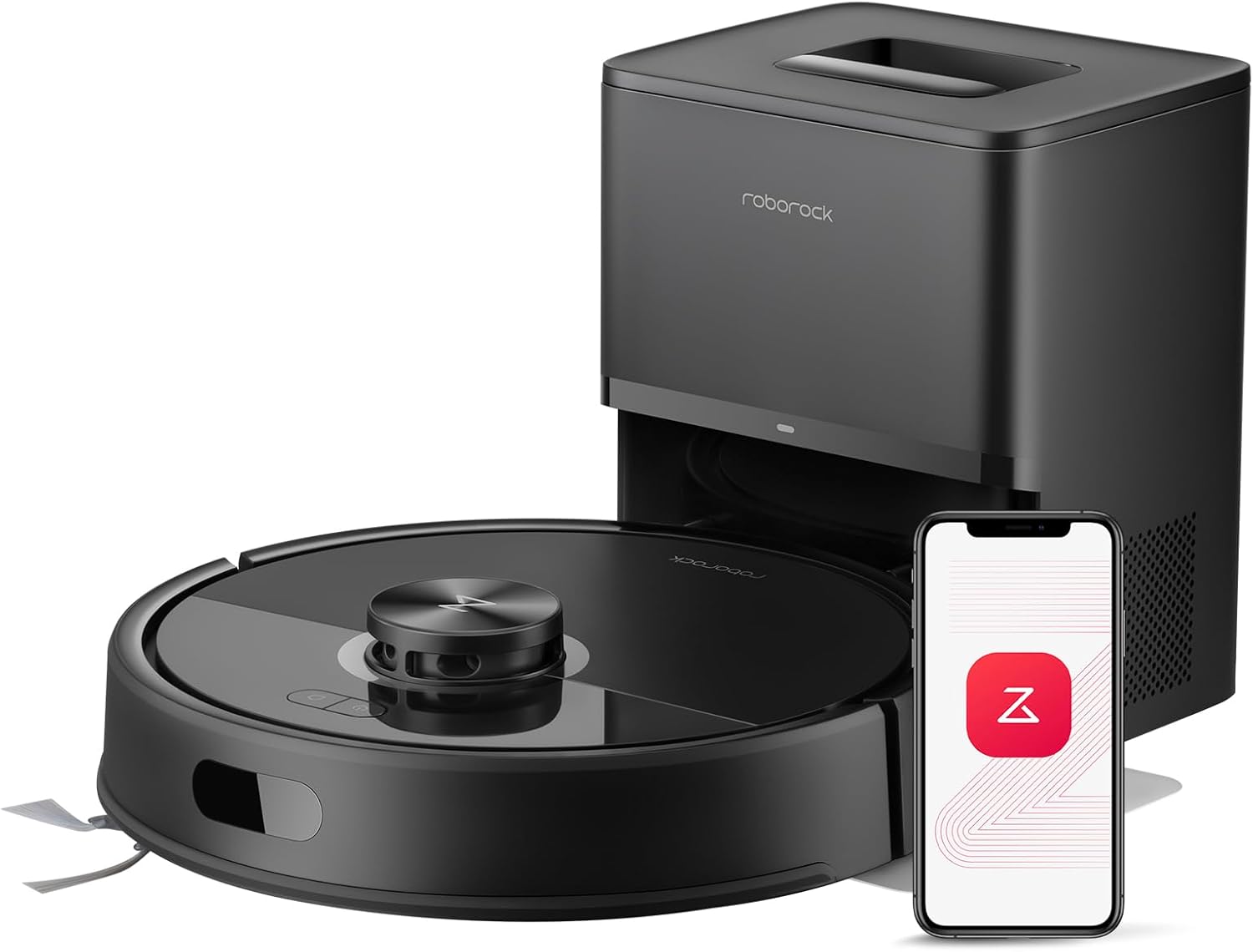
The roborock Q7 M5+ is an easy-to-use robot vacuum that maintains clean floors without repeatedly emptying its bin. The included RockDock Plus self-emptying system and 2.7L sealed dust bag can gather pet hair, dust, and crumbs for weeks—up to around 7 weeks in many homes—without your constant supervision.
One of the best features is how well it cleans. Designed to reach deeper into carpets and draw dirt from borders for a more thorough run across the room, it uses 10,000Pa HyperForce suction to lift hair and debris from wood, tile, marble, and carpet.
The dual anti-tangle design helps reduce upkeep for those who deal with hair wrap. With JawScrapers, you won’t have to spend as much time untangling rollers and the robot can keep cleaning uninterrupted—even when dealing with pets with lengthy hair.
Additionally, this model’s ability to mop and vacuum in one pass helps remove the tiny dust that sometimes remains after dry vacuuming. You may choose between three different water flow settings, so you can mop your floors lightly for regular maintenance or with more force when they require it.
When using the Roborock app, control is kept easy. Regardless of how hectic your calendar gets, you can still start cleanings whenever you want, set timetables, and change settings from any location.
Things to Consider Before Buying a Robot Vacuum:
Just assess your home and habits to determine whether a robot vacuum fits your cleaning needs: consider floor types and thresholds, pet hair and allergy requirements, suction power, navigation and mapping accuracy, battery life and recharge time, maintenance and filter costs, smart-home integration, and overall value for your budget to choose a model that reliably maintains your space.
Autonomous Robot Vacuums
You get devices that map entire homes, let you set no-go zones via app, and run scheduled cleaning with minimal input; popular lines like Roomba i-series offer room-by-room mapping and about 75-120 minutes runtime, while many units auto-dock and resume to finish jobs, making them efficient for busy households and multi-room coverage.
Hybrid Robot Vacuums
You’ll find hybrids that vacuum and mop in one pass, with models such as the Roborock series offering carpet-detection and mop-lift features; expect water tanks of roughly 200-300 ml, mid-to-high suction around 2,000-2,500 Pa on common hybrids, and app controls to toggle modes per room.
More specifically, hybrids perform best on mixed hard-floor homes: you can schedule vacuum-first, mop-later cycles, avoid using bleach or thick detergents in tanks, and plan for extra maintenance-mop pads need washing and filters more frequent replacement; if you have deep-pile carpets, choose a hybrid with reliable carpet-lift or use zone-based scheduling to preserve mop heads.
Floor Type Compatibility
You should match the vacuum to your surfaces: hard floors favor soft roller brushes to avoid scratching, while low- and medium-pile carpets clean well with combination heads; high-pile rugs often require stronger suction (2,500+ Pa) and a robust roller. Many models climb thresholds up to about 1.5-2.0 cm (0.6-0.8 in), but tassels and fringe can tangle brushes, so consider a model with anti-tangle design or easy brush removal.
Battery Life and Charging Options
Expect 60-120 minutes on typical mid-range models and 120-180+ minutes on higher-end units; charging generally takes 2-5 hours. You should favor auto-dock and resume features for larger homes-robots that recharge and resume can finish long jobs without user intervention. Some docks add auto-empty capability, reducing manual maintenance while increasing upfront cost and dock footprint.
Battery longevity hinges on chemistry and cycles: most modern robots use Li-ion packs that tolerate roughly 300-500 full charge cycles before noticeable capacity drop, equating to about 1-2 years with daily use. You can extend life by scheduling shorter, targeted cleanings, avoiding extreme temperatures, and updating firmware that optimizes power management. Replacement batteries typically cost in the tens of dollars, so factor long-term ownership costs when choosing a model.
Evaluating Brand Reputation
You should check warranty length (typically 1-2 years), availability and cost of spare parts, frequency of firmware updates, and the presence of local service centers; brands with wider support networks tend to have shorter repair turnaround. Also scan user forums for recurring hardware or app issues before committing.
Dig deeper by reviewing repairability scores (e.g., teardown guides), replacement part prices , and update cadence-brands that push security and navigation updates every few months keep performance steady. Also verify data practices for cloud-stored maps and whether the vendor offers local-only map options to protect your privacy.
Advantages of Using a Robot Vacuum
You’ll get consistent, scheduled cleaning that keeps floors tidy between deep cleans; many models run 60-120 minutes per charge and handle hard floors plus low-to-medium pile carpet. Premium units offer app-based zone cleaning, voice control and self-emptying docks (some hold ~60 days), so you spend far less time on day-to-day maintenance and can focus manual effort on corners and stairs.
Disadvantages to Keep in Mind
You should expect limitations: robots often miss deep dirt in high-pile rugs, can snag cords or fringe, and have smaller dustbins that fill quickly without a base. Navigation can struggle in cluttered rooms and stairs remain a manual task, so a full-size vacuum is still useful for periodic deep cleans.
Maintenance and lifecycle costs add up: filters typically need replacement every 1-3 months, brush rolls every 6-12 months, and batteries often last 1-3 years. Mapping data is usually stored in the cloud for convenience, which raises privacy considerations you may want to review in the manufacturer’s policy. If your home has lots of thresholds, pet hair on high-pile carpets, or many cords, plan on pairing a robot with occasional manual vacuuming for best results.
Researching Features
Prioritize navigation, suction and runtime based on your floorplan: for pet hair aim for 2,000+ Pa or rubber brush systems, for complex layouts choose LIDAR/visual SLAM, and expect 60-180 minutes runtime; opt for HEPA filters if you have allergies.
Dive deeper into specifics: look for multi-floor mapping (3-10 saved maps), bin capacity (0.3-0.6 L) which affects emptying frequency, noise levels (55-70 dB), and maintenance cadence-brushes cleared weekly, filters replaced 2-4 times/year-to judge long-term fit for your household.
Troubleshooting Common Issues
If your robot reports errors, won’t dock, or loses suction, start with a quick system check: reboot by holding the power button ~10 seconds, clean sensors and charging contacts with a dry cloth, and verify the dock has 0.5-1 m of clear space. Replace worn brushes or filters to resolve low-suction alerts and rerun a short test cycle to confirm recovery.
When mapping or navigation fails, clear the map and remap with doors closed and low clutter; LIDAR-based units handle low light better than camera-based models. For battery decline expect roughly 300-500 charge cycles-if capacity falls below ~70% within a year, consider battery replacement. Save app logs and model/serial info before contacting support for faster diagnostics.
To wrap up
Presently you should weigh cleaning performance, battery life, suction power, navigation system, app and smart-home integration, maintenance needs, noise level, and compatibility with your flooring and pets. Assess costs for filters and brushes, warranty and support, and whether scheduled cleaning, boundary control, and mapping meet your lifestyle to ensure the device truly fits your home.
Leave a Reply