
Finding the best window air conditioner shouldn’t be a chore while you’re sweating through a blistering summer night. You deserve instant relief without high power bills or a noisy motor. We’ve reviewed top models for cooling capacity and energy efficiency to help you reclaim your comfort. This guide highlights quiet units that turn any sweltering room into a chilled sanctuary. Here are our top picks to keep you cool and relaxed all season long.
Contents
- Top 7 Window Air Conditioner:
- 7: Amazon Basics 5000-BTU Window Air Conditioner
- 6: LG 5,000 BTU Window Air Conditioner LW5023
- 5: Frigidaire 10,000 BTU Window Air Conditioner
- 4: Windmill Window Air Conditioner
- 3: Hykolity 8,000 BTU Smart Inverter Window Air Conditioner
- 2: Midea Inverter Window Air Conditioner with Heat, 12,000 BTU
- 1: Midea 12,000 BTU U Shaped Smart Inverter Window Air Conditioner
- Things to Consider Before Buying a Window Air Conditioner:
- BTU Cooling Capacity and Room Size
- Energy Efficiency Ratios and Star Ratings
- Noise Level Specifications and Decibel Ratings
- Advantages of Cost and Ease of Installation
- Limitations Regarding Natural Light and Security
- Measuring Window Opening Dimensions
- Calculating Square Footage Requirements
- Assessing Electrical Circuit Compatibility
- Regular Filter Cleaning and Airflow Optimization
- Proper Use of Programmable Timers and Smart Features
- Seasonal Storage and External Protection
- To Wrap Up
Top 7 Window Air Conditioner:
7: Amazon Basics 5000-BTU Window Air Conditioner
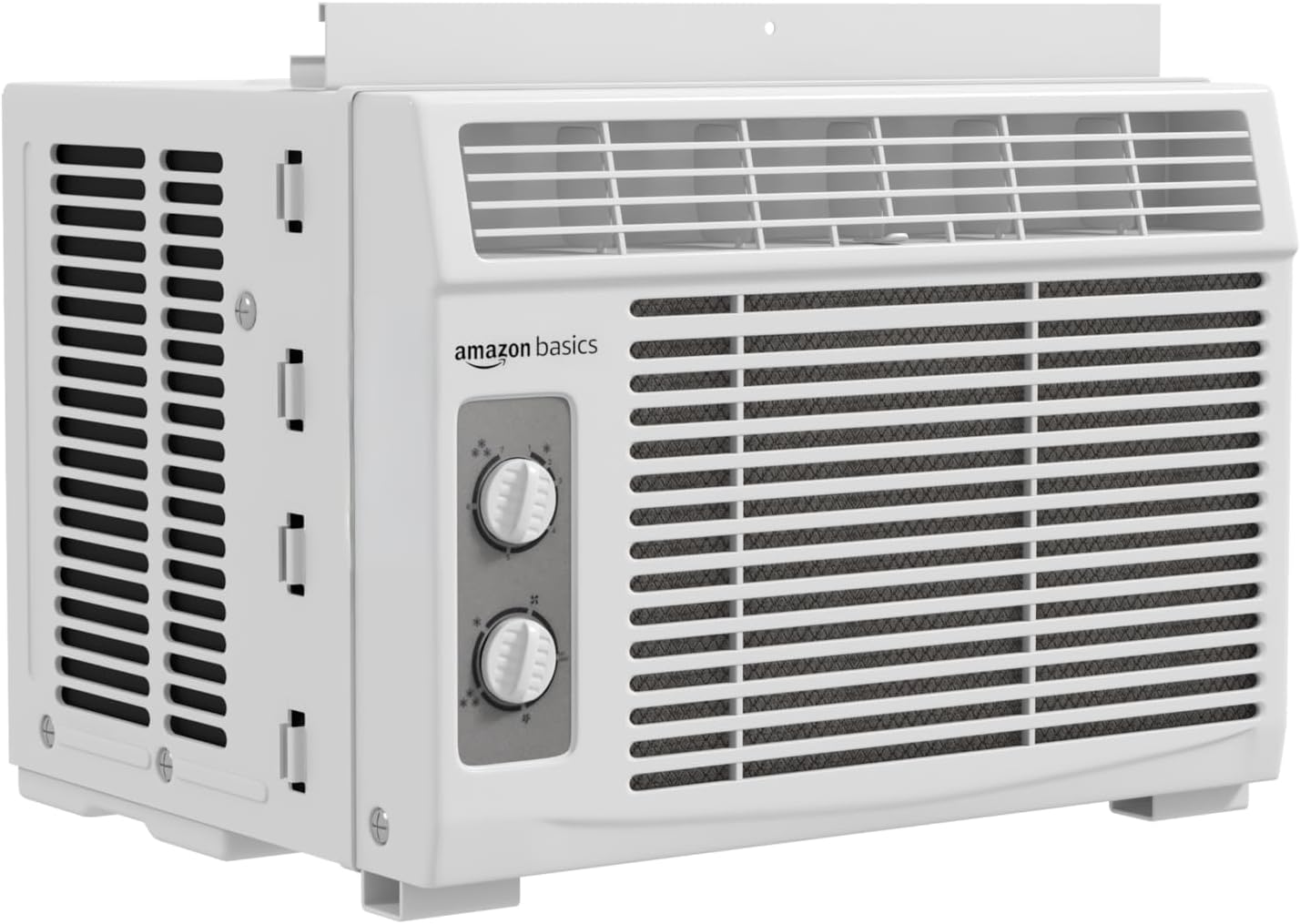
The finest ultra-budget option for a single tiny room is the Amazon Basics 5000-BTU.You should not spend a car payment for a bedroom cold tonight.The first is 5,000 BTU, which is enough for a 150 square foot area, which is around the size of a bedroom or home office.Now we have seven heat settings, two fan speeds, and a two-way air direction system to keep chilly air away from your pillow.
Lastly, the expandable side panels only require 13 inches of height and may suit windows that are 23 to 36 inches wide.Drawbacks: you can hear it all night long at 56 dB. There is no timer, no app, and no remote. After 150 square feet, it lags behind.Ideal for: frugal tenants looking to chill a one-bedroom apartment. Avoid if you’re a light sleeper or have a bright living room.
6: LG 5,000 BTU Window Air Conditioner LW5023

The most effective, silent, and app-free option for small windows is the LG LW5023.Budget units abound, and many of them will keep you awake while cooling.First, at night, the drop from the ultra-budget category becomes glaringly apparent at 50 dB on low.Also, it works in flats built before the war, while conventional units cannot fit double-hung windows that are narrower than 21 inches.
Lastly, there is an Energy Saver mode with mechanical dials. It functions normally even without Wi-Fi, an app, or firmware.Disadvantages: the ceiling is 150 square feet, and the BTU is still 5,000. You can’t slide out the fixed chassis to store it. Oh no, the remote is missing.Apartments with narrow sashes, light sleepers on a budget, and older homes are the best options. Not suitable for: management of phones or huge rooms.
5: Frigidaire 10,000 BTU Window Air Conditioner
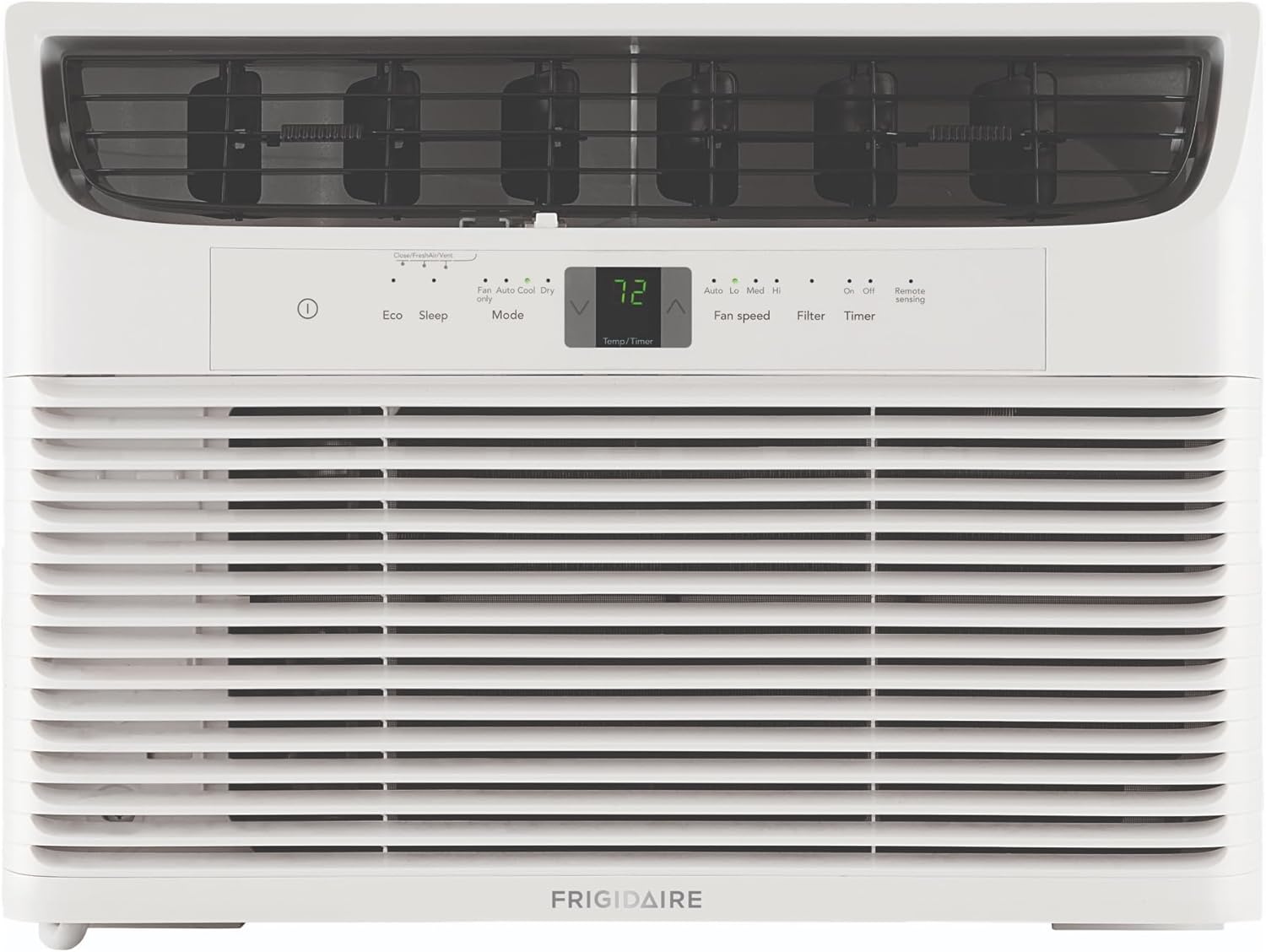
The ideal choice for open floor plans and studio apartments is the Frigidaire 10,000 BTU.In a studio, a 5,000 BTU unit will never be enough.To start, it has a 10,000 BTU capacity, which works out to 450 square feet, or three times the area of everything below it.Following that, 6-way directional airflow diverts airflow away from the closest wall and instead propels it across an open floor plan.
As a last feature, the Sleep Mode lowers the temperature while you sleep, and a 24-hour timer lowers it before you enter the room.The lack of a door to muffle the 53 dB noise level is a major drawback. To lift, you’ll need a partner. Fans that cycle in Eco Mode upset some customers.Apartment dwellers and those with open floor plans will love this. No good for rooms with little space or those who tend to sleep lightly.
4: Windmill Window Air Conditioner

For tenants who dread installation day, The Windmill is the ideal choice.For window units that require tools, the standard package contents include foam, brackets, and instructions.To start, you only need one person and an evening to install the whole kit because it comes already put together and doesn’t require any equipment.After that, instead of directly hitting the person sitting closest, the cold air is distributed across the room at a 45-degree upward angle.
Lastly, the lights automatically turn out at night and there is dual filtration, which uses a washable mesh filter in conjunction with optional activated carbon.Cons: It has decent cooling, but it can’t compete with a Frigidaire in a fully-equipped studio. Filters made of carbon are an ongoing expense. The app is necessary for complete control.Ideal for: flats with a design focus, tenants who like to install alone, and people who move often. Avoid if you’re trying to chill a huge room or save money on cooling.
3: Hykolity 8,000 BTU Smart Inverter Window Air Conditioner

The most cost-effective inverter for people who have trouble sleeping is the Hykolity 8,000 Smart Inverter.Every night, the compressor is hammered on and off by standard units. It is the pedaling, not the temperature, that awakens you.To start, there’s an inverter compressor that ramps rather than cycles; it can operate at a whisper-quiet 32 dB.Secondly, at 740 watts, it has a CEER rating of 15.0—the quietness also shows up on your electricity bill.
Lastly, it has a temperature range of 61 to 88 degrees, built-in Wi-Fi, app control, and a remote.Disadvantages: Less customer support history compared to LG or Frigidaire. It is a heavy operation for inverter units. For app control, 2.4 GHz Wi-Fi is required.Most suited for: budget-conscious light sleepers seeking inverter-hush. Intended audience: studios and brand-loyal consumers.
2: Midea Inverter Window Air Conditioner with Heat, 12,000 BTU

The sole unit that operates in both directions, the Midea Inverter with Heat is the greatest option all year round.The summer months are the worst for a window air conditioner. And then it’s October, and your apartment’s heater is either turned off or scorching.We start with 550 square feet cooled by 12,000 BTUs, which includes dehumidification for those hot, muggy summer days.Just around the corner, we have a heat pump mode that will keep you warm all winter and into early spring without the need for a separate space heater.
Last but not least: a 45 dB Energy Star inverter that you can operate with your voice via an app, a smartwatch, or even Alexa or Google.The heat pump will not work in the dead of winter because it shuts off at 41 degrees. Huge, hefty, and requiring a window between 24 and 38.5 inches in diameter.Ideal for: storage-constrained renters and flats with unpredictable heating systems. Avoid in colder regions that require actual heat.
1: Midea 12,000 BTU U Shaped Smart Inverter Window Air Conditioner

As far as apartment air conditioners go, the Midea 12,000 BTU U Shaped is your best bet in 2026.Throughout the summer, every other unit here locks your window shut, keeping the compressor inside the room.To start, the window may still be opened and closed through the middle because the U-shape encircles the sash.Second, the compressor is 32 dB quieter than the open pane, which is nine times quieter.Thirdly, the first window air conditioner to receive the Energy Star label saw energy savings of more than 37% thanks to DC inverter technology.
Wi-Fi via the SmartHome app, voice control with Alexa and Google, and a window lock to prevent burglary make up the fourth feature.However, this is the priciest unit available. Do not use casements or sliders; only double-hung windows. A helper is required for installation.Apartment dwellers, light sleepers, and those living on busy streets will benefit the most. Not suitable for: casements or limited finances.
Things to Consider Before Buying a Window Air Conditioner:
There’s a surge in demand for window air conditioners as summers get increasingly hotter. With various options available, it’s crucial to evaluate several factors before making a purchase, ensuring you choose the right model for your space and cooling needs.
BTU Cooling Capacity and Room Size
Understanding BTU (British Thermal Unit) ratings helps determine the appropriate air conditioner size for your room. A model with insufficient BTUs will struggle to cool effectively, whereas one with excessive capacity may cycle on and off frequently, leading to increased energy consumption.
Energy Efficiency Ratios and Star Ratings
Energy efficiency ratios (EER) and star ratings indicate how effectively a window air conditioner converts electricity into cooling power. Higher EER ratings suggest lower energy bills and reduced environmental impact, making informed choices more beneficial in the long run.
Most window air conditioners carry an energy efficiency ratio, usually calculated by dividing the cooling capacity (in BTUs) by the power consumption (in watts). Additional Energy Star ratings provide insight into efficient models. Choosing units with higher ratings often translates to significant savings over time, particularly during peak usage months.
Noise Level Specifications and Decibel Ratings
Noise level specifications detail how quietly a unit operates, typically measured in decibels (dB). Selecting models with lower dB ratings ensures a more comfortable environment, particularly for bedrooms or spaces where quietness is paramount.
Commonly, window air conditioners exhibit decibel levels ranging from 40 dB (whisper-quiet) to over 60 dB (typical conversation volume). Understanding these ratings helps in avoiding unexpected disturbances, allowing for a peaceful atmosphere while the unit operates. Any air conditioner considered should ideally maintain sound levels comparable to a quiet library for optimal comfort.
Advantages of Cost and Ease of Installation
Affordability stands out as a key benefit of window-mounted systems. Installation typically requires minimal tools, making it accessible for most homeowners. This simplicity often results in lower upfront costs, appealing to budget-conscious buyers.
Limitations Regarding Natural Light and Security
Window units can obstruct natural light, a significant drawback for many. Security may also become a concern since the installation generally leaves the window partially open, which could create vulnerabilities.
Blocking sunlight can impact both room ambiance and energy efficiency. While cooling is necessary during hot months, relying on artificial lighting due to a blocked window can lead to higher electricity costs. Concerns regarding security are also valid; a partially open window offers easier access for intruders. Homeowners may need to consider additional security measures to mitigate these risks, making window units less appealing in high-crime areas.
Measuring Window Opening Dimensions
Begin by accurately measuring the height and width of your window opening. Take measurements from the inside of the frame, ensuring you account for any obstructions like sills or screens that may affect fitting.
Calculating Square Footage Requirements
Evaluate the total square footage of the room to determine the necessary cooling capacity. A general guide suggests about 20 BTUs per square foot, but those with high ceilings or sun exposure may require more.
Understanding the specific square footage is crucial for determining the adequate BTU rating your air conditioner needs. For instance, if a room measures 300 square feet, a unit with at least 6,000 BTUs would be recommended, while factors like room layout and insulation can adjust this estimate significantly.
Assessing Electrical Circuit Compatibility
Inspect your electrical system to ensure it’s suitable for a window air conditioner. Units may require dedicated circuits and specific voltage ratings, which can differ widely across models.
Status of the electrical wiring also plays a significant role in functionality. Older homes may present challenges, as outdated circuits might not handle the load of a new air conditioner. Always verify that the circuit breaker and wiring meet the demands of your selected unit to prevent any electrical issues during operation.
Regular Filter Cleaning and Airflow Optimization
Cleaning the air filter monthly is imperative for maintaining airflow and efficiency. Clogged filters restrict airflow, making the unit work harder and consume more energy.
Proper Use of Programmable Timers and Smart Features
Setting programmable timers allows for tailored cooling schedules. By configuring your air conditioner to operate only when needed, you reduce energy consumption and costs.
Many modern window air conditioners come equipped with smart features that enhance usability and efficiency. These include Wi-Fi connectivity, which enables remote control via smartphone apps. Such features allow you to adjust settings before arriving home, ensuring the space is cool without running the unit continuously. Over time, these practices can result in significant energy savings.
Seasonal Storage and External Protection
Storing your air conditioner properly during the off-season is necessary to protect it from environmental damage. A dedicated storage space can prolong its life and functionality.
During the off-season, keep the unit in a dry, sheltered area to prevent moisture-related issues. Additionally, consider using protective covers to shield it from dust and debris. Ensuring proper storage can minimize the risk of mechanical failures and maintain efficiency for the next cooling season.
To Wrap Up
Evaluating your specific needs and environment ensures a well-informed air conditioner purchase. Key aspects include size, energy efficiency, and installation requirements. By assessing your unique situation, you can select a model that not only cools effectively but also fits your home’s design and budget, leading to long-term satisfaction and performance.
Leave a Reply